


Free guide · The Storefront Readiness Check
Would a first-time customer find your door?
The free Storefront Readiness Check walks you through eight practical checks for your sign, entrance, hours and pickup directions: one walk in daylight, one after dark.
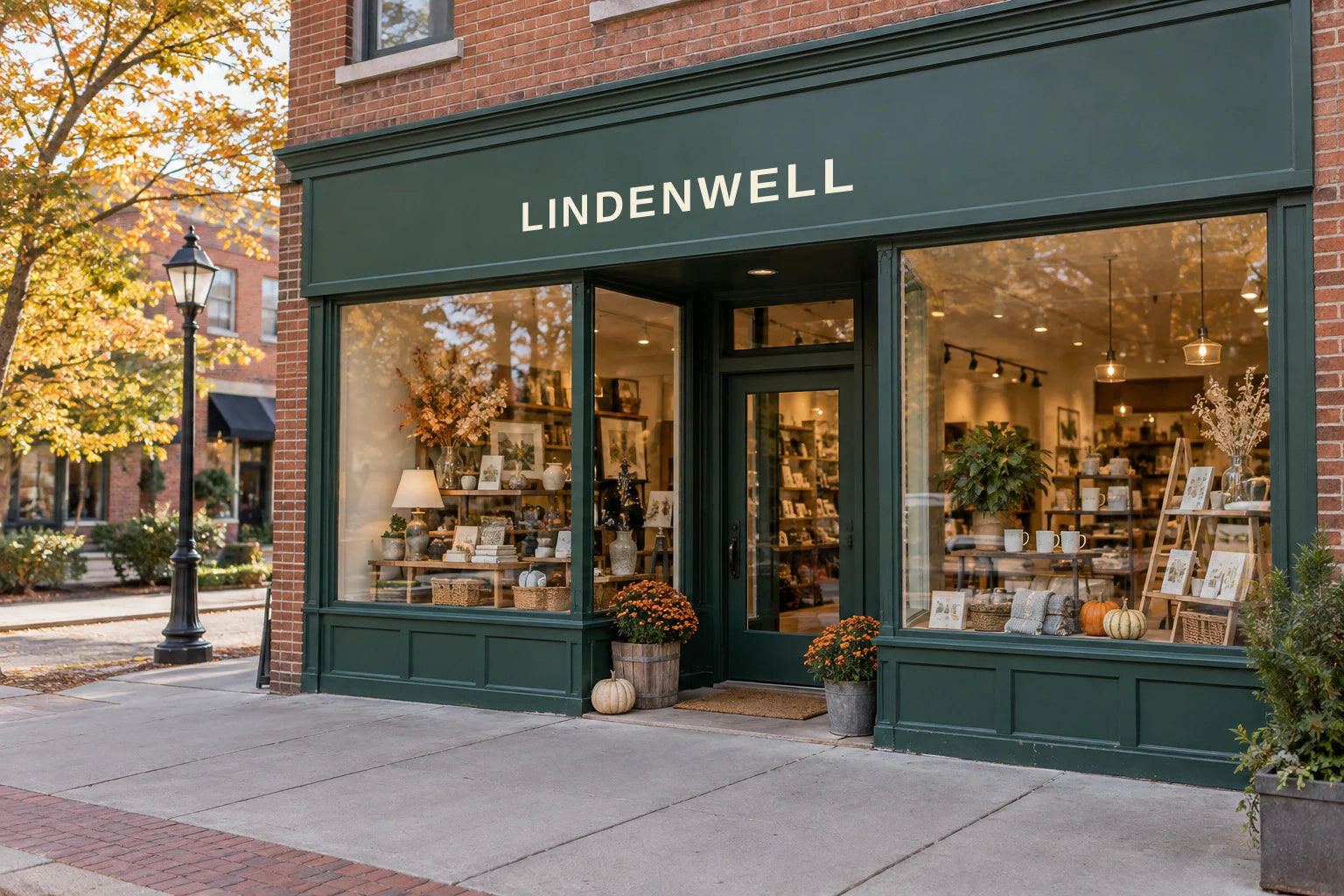
Eight checks for the way customers actually arrive
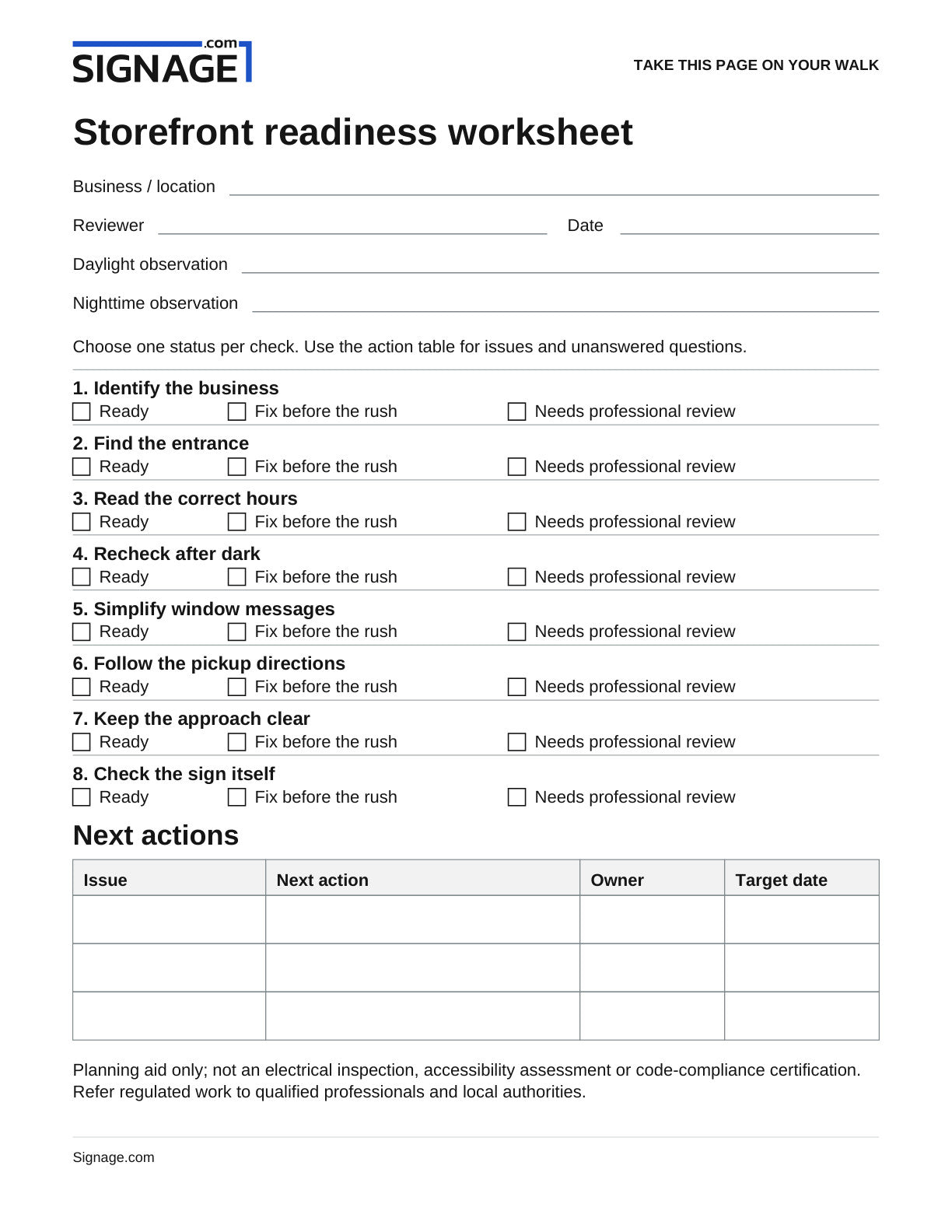
Mark each one Ready, Fix before the rush or Needs professional review, then give every fix an owner and a date.
-
Identify the business
Can people pick out your name from the way they actually approach, and could a courier read your street number from the curb?
-
Find the entrance
Is the public door obvious, or could a visitor try a service door, a neighbor's unit or the pickup area first?
-
Read the correct hours
Do the door, your website and your business listings agree, holiday exceptions included?
-
Recheck after dark
From across the street, can you still read the name and find the door? If lights run on a timer, check the on and off times.
-
Simplify window messages
Can visitors find the name, door and hours without sorting through old offers and duplicate notices?
-
Follow the pickup directions
Place a test order and follow your own pickup message from the street to the handoff.
-
Keep the approach clear
Are decorations, deliveries or displays sitting in the customer route while you're open?
-
Check the sign itself
From the ground, look for faded faces, peeling vinyl, dark letters and anything that looks loose.
Look again after dark.
A clear storefront in daylight can feel very different after sunset.
Daylight
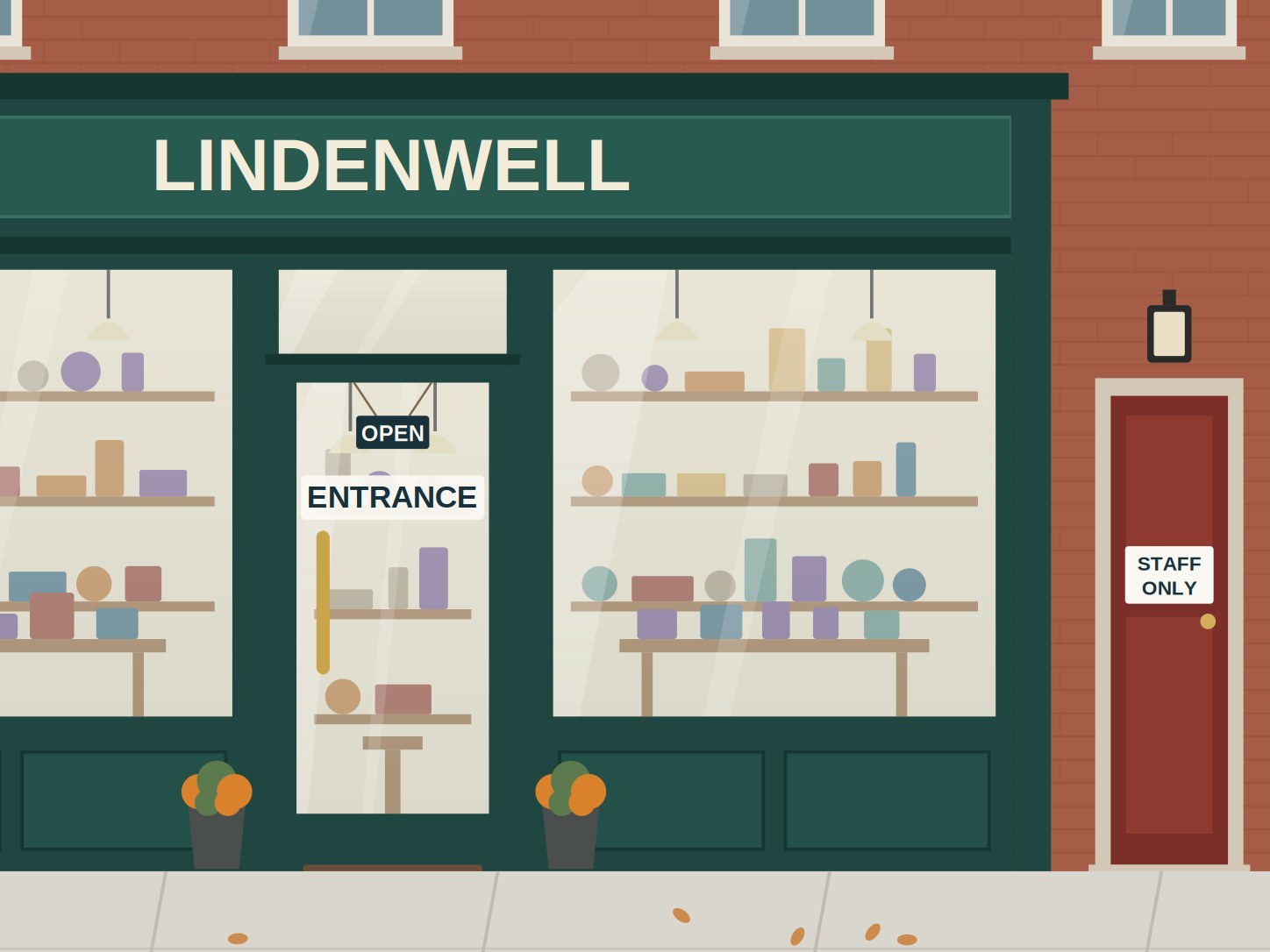
In daylight, the name and door labels are readable.
After dark
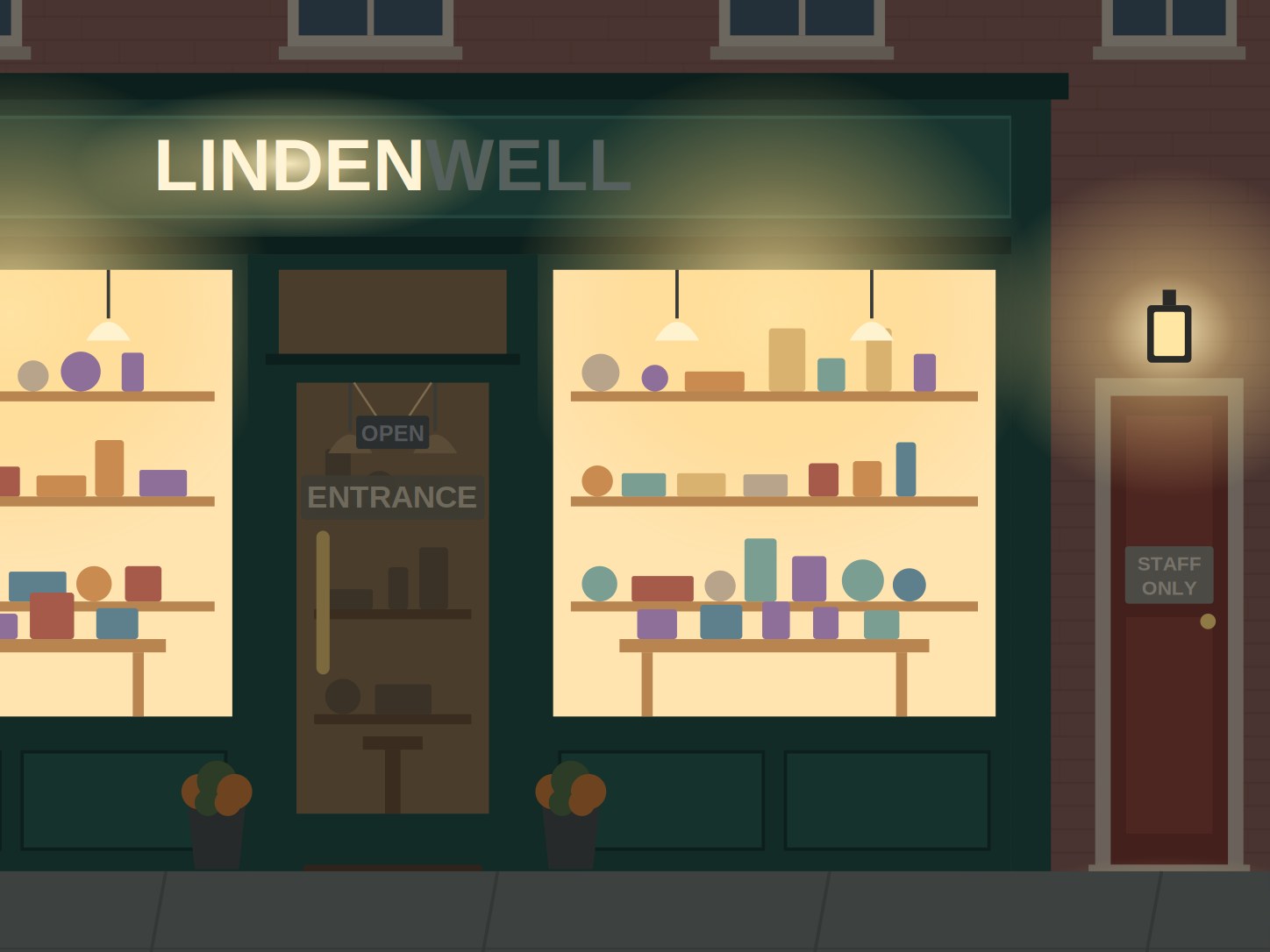
After dark, part of the sign goes unlit and the door fades between bright windows.
Illustrations of a fictional storefront.
Small fixes a first-time customer notices
Clutter and outdated notices can make a storefront harder to read.

Eight cards compete for attention, an old summer-hours notice is still up and the current hours are easy to miss.
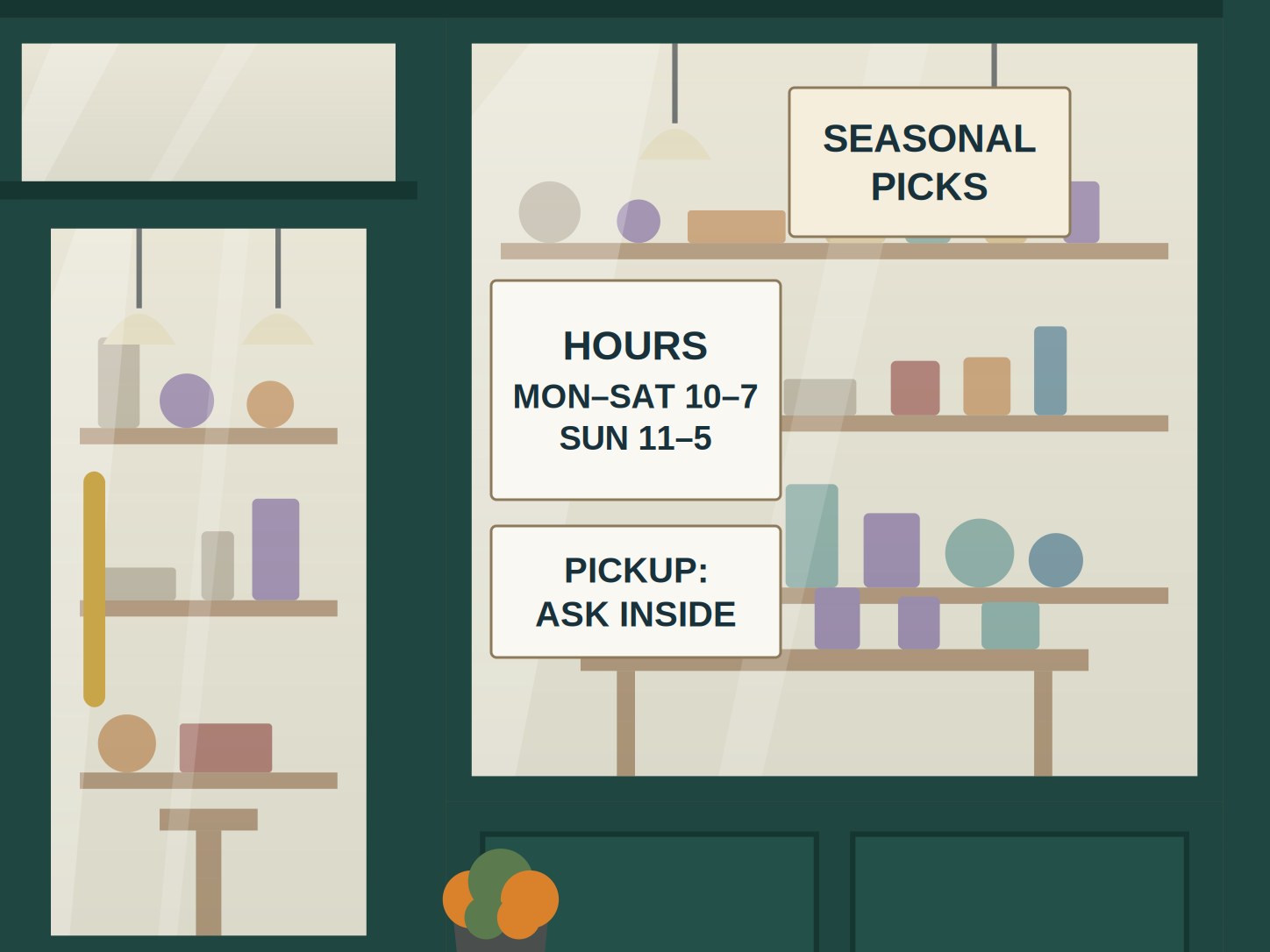
One promotional card, current hours at eye level beside the door and clear pickup directions.
Illustrations of a fictional storefront. Card wording and hours shown are fictional.

Two walks, one useful plan.
Walk in daylight
Start where customers usually arrive. Look at the name, entrance, hours and pickup directions, and photograph what you see.
Walk again after dark
Go when evening customers arrive. Look from across the street and up close.
Mark each check and assign the fix
Ready, Fix before the rush or Needs professional review, each with an owner and a target date.
Keep the walk safe. Keep it visual and at ground level. Don't climb, open a sign, touch wiring or attempt repairs. If something looks unsafe, stop and contact the property manager or a qualified professional.
Questions owners ask
When should I do the after-dark check?
When evening customers usually arrive. Once daylight saving time ends, that can be late afternoon.
Do I need a new sign?
Not necessarily. A faded notice may need replacing, and a good sign may simply need an obstruction removed. The guide helps you separate quick fixes from work that needs a professional.
What do the three statuses mean?
Ready means usable as you observed it. Fix before the rush means a task that needs an owner and a date. Needs professional review covers damage, mounting, electrical or access questions.
What's in the download?
One free 8-page PDF with the eight checks, illustrated examples, a repair, refresh or replace decision guide, and the printable worksheet on page 7. No email address is required.
Is this an inspection?
No. It's a planning aid, not an electrical inspection, accessibility assessment or certification of code compliance. Requirements vary by location and property.
Sources: Google Business Profile Help, How to set special hours; U.S. Department of Justice, Businesses That Are Open to the Public.
Storefront images show a fictional shop, LINDENWELL; no affiliation with any business is implied. Hours and card wording shown are fictional. The guide is a planning aid, not an electrical inspection, accessibility assessment or certification of code compliance.