


Your storefront sign keeps working after you flip off the lights inside. How it's lit affects how far away it reads, how it feels up close, and whether your brand looks consistent from daylight through dusk into full dark. On a custom business sign, lighting is one decision worth settling early, often before you lock in letter style, size, or color.
This guide covers the four illumination approaches buyers ask about most: front-lit, backlit (halo-lit), lightbox, and neon (including LED neon). It also touches on external lighting for signs that aren't lit internally. The point is to help you match a lighting type to your building, your brand, and how people actually see your sign.
Quick answer
Front-lit, backlit (halo-lit), lightbox, and neon or LED neon each light a sign differently and fit different goals. Front-lit letters read clearly from a distance. Halo-lit letters cast a softer glow behind the letters for a quieter look. Lightbox (cabinet) signs light a full graphic evenly. Neon and LED neon give you a continuous line of light with a lot of character. What fits depends on your business type, viewing distance, building surface, any landlord or local sign rules, and budget.
Key takeaways
- Front-lit channel letters light the face of each letter for clear, direct legibility. Common for retail and busier locations.
- Backlit (halo-lit) letters glow from behind onto the mounting surface for a softer, more architectural effect.
- Lightbox (cabinet) signs light an entire face evenly, which suits detailed logos, several lines of text, or larger graphics.
- Neon and LED neon give you a distinctive line of light. LED neon is generally more durable and more energy-efficient than traditional glass neon.
- Signs that aren't lit internally can still be lit from outside with gooseneck fixtures, floodlights, or ground spotlights.
- Business type, viewing distance, mounting surface, landlord and local sign rules, and budget all belong in the decision.
- Seeing a sign concept on your own building with a mockup can take some of the guesswork out before you commit to production.
What are the main sign lighting types?
The main illuminated types are front-lit, backlit (halo-lit), lightbox, and neon (including LED neon). Each lights a sign differently and fits a different look and viewing situation. Once you know how they differ, choosing for a storefront, restaurant, or office gets easier. Most of these come as channel letter signs or cabinet-style lightbox signs.
Front-lit signs: direct, face-lit illumination
Front-lit channel letters are among the most common illuminated signs. Light comes through the face of each letter, so your name and logo read clearly, including from a distance.
LEDs sit inside each channel letter and shine through a translucent acrylic face. You get clear legibility, strong color, and a bold, direct look. That combination is why they show up so often on retail and food service frontage, and on multi-location brand programs that need a consistent appearance.
One tradeoff: the direct light can feel less understated than other options, and some landlords or local codes limit brightness. Confirm any restrictions before you finalize a design. If your first goal is a name that reads clearly from the street, front-lit channel letters are a dependable pick.
Backlit (halo-lit) signs: a glow from behind
Backlit letters, also called halo-lit or reverse channel letters, glow from behind onto the wall around each letter instead of lighting the letter face. The effect is softer and more architectural, which is why a lot of businesses choose it for a quieter, current look.
The LEDs sit inside reverse-mounted letters facing the wall. Light bounces off the surface around the edges of the opaque letters and creates the halo. The result reads as refined and dimensional, and it tends to work well on clean, light-colored facades. You see it on restaurants, boutique retail, and medical and professional offices.
Two things to weigh. The glow is less direct than front-lit letters, so it can read less strongly in fast-moving traffic. And the effect leans heavily on the mounting surface color and texture. Go halo-lit when you want a softer first impression that sits closer to the architecture.
Comparison: front-lit vs backlit channel letters
| Feature | Front-lit channel letters | Backlit (halo-lit) channel letters |
|---|---|---|
| Illumination | Direct, through the letter face | Indirect, glowing from behind the letters |
| Reads best at | Longer distances and higher speeds | Closer and mid-range viewing |
| Look | Bold, direct, classic commercial | Soft, dimensional, architectural |
| Effect | Clear name recognition | Depth and ambiance |
| Common uses | Retail, food service, busier frontage | Restaurants, boutiques, offices, medical |
| Surface dependence | Lower | Higher, relies on the mounting wall |
When is a lightbox sign the right choice?
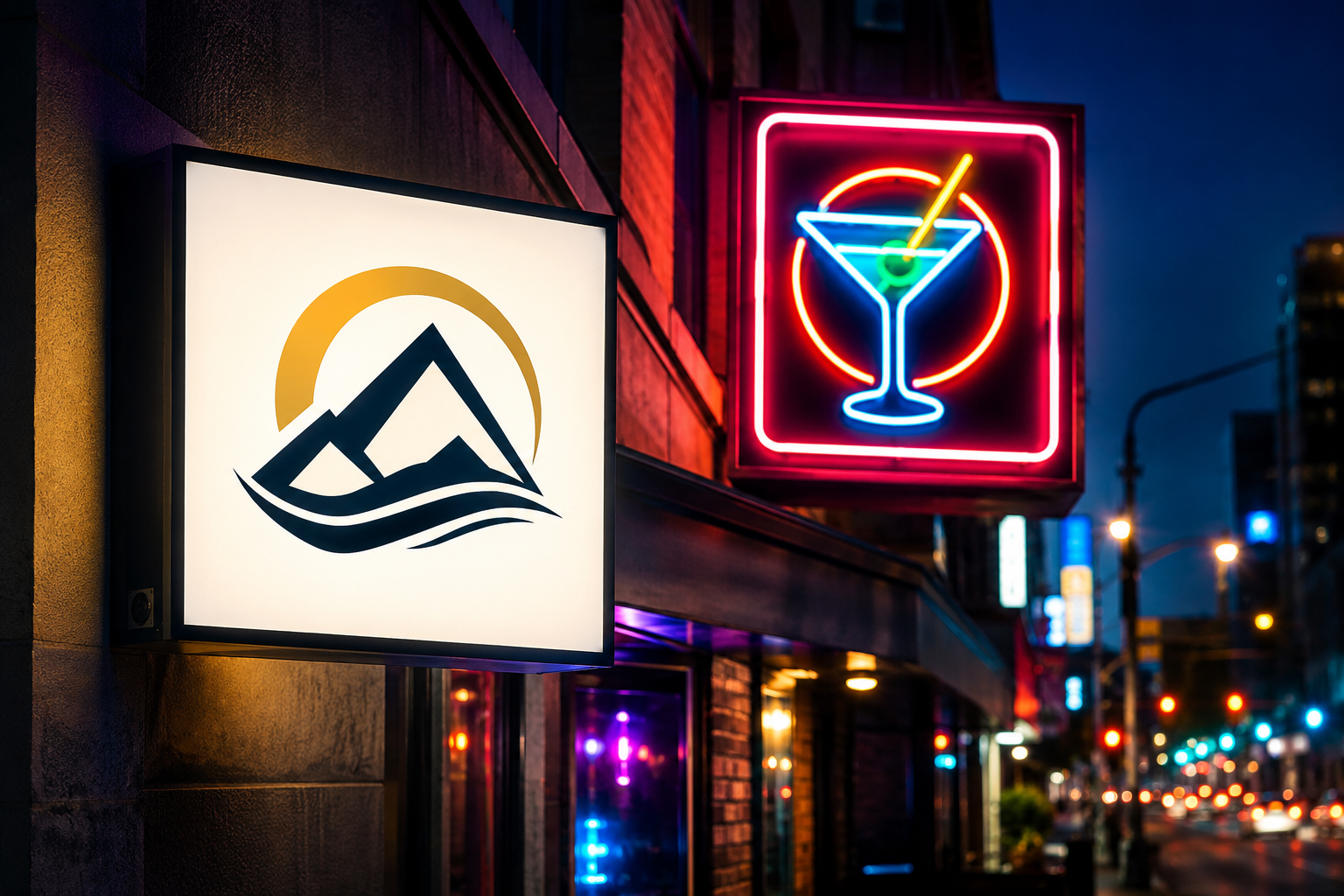
Lightbox signs, also called cabinet signs, light an entire face evenly. That makes them a good fit for detailed logos, several lines of text, or larger graphics. A light source inside the cabinet shines through a translucent face, so brightness stays consistent across the whole sign.
Inside a metal cabinet, LEDs light a translucent acrylic or polycarbonate face, usually finished with printed or vinyl graphics. You get even lighting with room for intricate logos and layered information, and the format scales to larger areas. That is why you find lightboxes on storefronts with detailed branding, service businesses, and signs that carry more than a single word, like menu panels or informational faces.
The main tradeoff is depth. A cabinet reads as flatter than dimensional channel letters, so think about how the shape sits against the building. If your sign needs to carry a full logo or detailed graphic evenly lit, a lightbox is worth a look. You can browse cabinet styles under lightbox signs.
What role do neon and LED neon play?
Neon and LED neon give you a continuous line of light. Traditional neon uses electrified gas-filled glass tubes. LED neon uses flexible LED strips inside a silicone or rubber housing to get a similar look. Both bring character and mood, which is why they turn up so often in hospitality and as accent pieces.
With traditional neon, gas-filled glass tubes glow in specific colors when electrified. LED neon mimics that tube look, generally with lower energy use and better durability. Either way, the light is distinctive and character-driven, and it suits a retro, artistic, or playful brand. You see both in bars, cafes, specialty retail, and entertainment venues, often as indoor accent pieces or lobby signs.
A couple of caveats. Traditional glass neon is more fragile and usually needs more upkeep. And both approaches favor visual impact over dense, long-distance text, so they are less about reading a paragraph from across the street. Some landlords also limit certain colors or styles. Reach for neon or LED neon when you want a signature visual statement rather than plain functional lighting.
External lighting for signs that aren't lit internally
Not every sign needs internal lighting. Dimensional letters, metal signs, and monument signs can be lit from outside to stay visible after dark.
Gooseneck lights mount above the sign and angle down onto the face for a classic, focused look. Floodlights aim more broadly across a larger sign or facade. Ground spotlights light a monument or pylon sign from below to bring out the structure.
External lighting gives you options when internal illumination isn't practical. Plan for shadows, light spill, and periodic maintenance of the fixtures.
How to choose a sign lighting type
Sorting out the details up front makes it easier to get the right sign and a more accurate quote. Weigh these together rather than one at a time.
- Business type and brand. Do you want a bold, direct sign or a softer, quieter one?
- Viewing distance and speed. How far away, and how fast, are people when they read your sign? Factor in surrounding light and reflections.
- Time of day. Does the sign need to perform mostly at night, or across daylight, dusk, and dark?
- Landlord and local sign rules. Many properties and municipalities set limits on size, materials, and brightness. Check these early.
- Budget. Illuminated signs generally use more materials and wiring than non-illuminated ones.
- Maintenance. LED lighting is energy-efficient and low-maintenance compared with older technologies. The U.S. Department of Energy has a plain overview of LED lighting if you want background.
- Seeing it in place. A visual preview on your own storefront helps you compare letter style, color, illumination type, and scale before you commit.
Why a mockup helps before you commit
Sign lighting is a visual call, and it's genuinely hard to picture how a front-lit sign versus a halo-lit one will look on your specific building. A visual preview lets you see each illumination type against your building's surface and colors, in day and night conditions. It also helps you compare scale and placement so the size and lighting method fit the spot, and it takes some of the guesswork out of a custom purchase by showing the result before production. As a bonus, once you have settled on a direction, you can hand over clearer details when you request a quote.
Signage.com's Design Studio is a visual mockup aid. It lets you preview sign concepts on an image of your storefront and compare letter style, color, illumination type, and scale. It's for exploring the look and gathering quote-ready details, not for final engineering, permit, fabrication, installation, or code-compliance documentation.
FAQ
What is a common type of illuminated sign?
Front-lit channel letter signs are widely used because their face-lit letters read clearly and directly.
Which lighting type suits a softer, quieter look?
Backlit (halo-lit) channel letters are often chosen for a softer, more architectural effect, since the light glows from behind the letters.
Are lightbox signs only for retail?
No. Lightboxes show up across retail, restaurants, offices, and service businesses, especially when a sign needs to carry a detailed logo or several lines of text.
What's the difference between neon and LED neon?
Traditional neon uses gas-filled glass tubes. LED neon uses flexible LED strips that imitate the look, generally with better durability and lower energy use.
Do all outdoor signs need to be illuminated?
Not necessarily. Some signs rely on external lighting or daytime visibility, though illumination helps a sign read in the evening and at night.
How do I decide which lighting type is right?
Weigh your brand look, viewing distance, building surface, landlord and local rules, and budget together. A visual mockup can help you compare options on your own storefront.
Wrapping up
Front-lit, backlit, lightbox, and neon each light a sign differently, and none is universally right. The fit depends on your building, your brand, and how customers see your sign. Front-lit letters read directly, halo-lit letters glow softly, lightboxes carry detailed graphics evenly, and neon adds character. Start from how and where your sign will be seen, check any landlord or local requirements early, and preview your concept in place before you commit.
