


A neon sign does a few useful jobs for a business. It helps you get noticed, it says something about your personality, and, if it's sized right, it settles into your space instead of fighting it. A good one can turn a storefront into a spot people recognize on the street, or give an interior a mood it didn't have before.
This guide covers where neon tends to work, how glass and LED neon differ in practice, and the placement and fit questions worth sorting out before you ask for a quote. If you're stuck between neon and another lit sign, or between an outdoor storefront piece and an indoor accent, the aim is to give you enough to decide with some confidence.
Key takeaways
- Neon reads well after dark, and the colored tubing carries some visual interest during the day too.
- Traditional glass neon and LED neon share a look but differ in durability, upkeep, and how much power they pull.
- Your brand, your building, and whether the sign lives indoors or out should all shape the design.
- Placement, scale, and sightlines matter about as much as the artwork.
- Local codes, landlord rules, and power access are cheaper to confirm early than to fix later.
- Signage.com's Design Studio lets you picture a neon concept on your own storefront as a visual mockup. It's a way to compare style and scale, not a stand-in for engineering, permitting, or installation planning.
Why neon gets a business noticed
Neon glows, and that glow cuts through a cluttered street, especially once the light drops. For a shop, restaurant, bar, or salon that stays open into the evening, that after-dark presence is often the main reason to buy one in the first place.
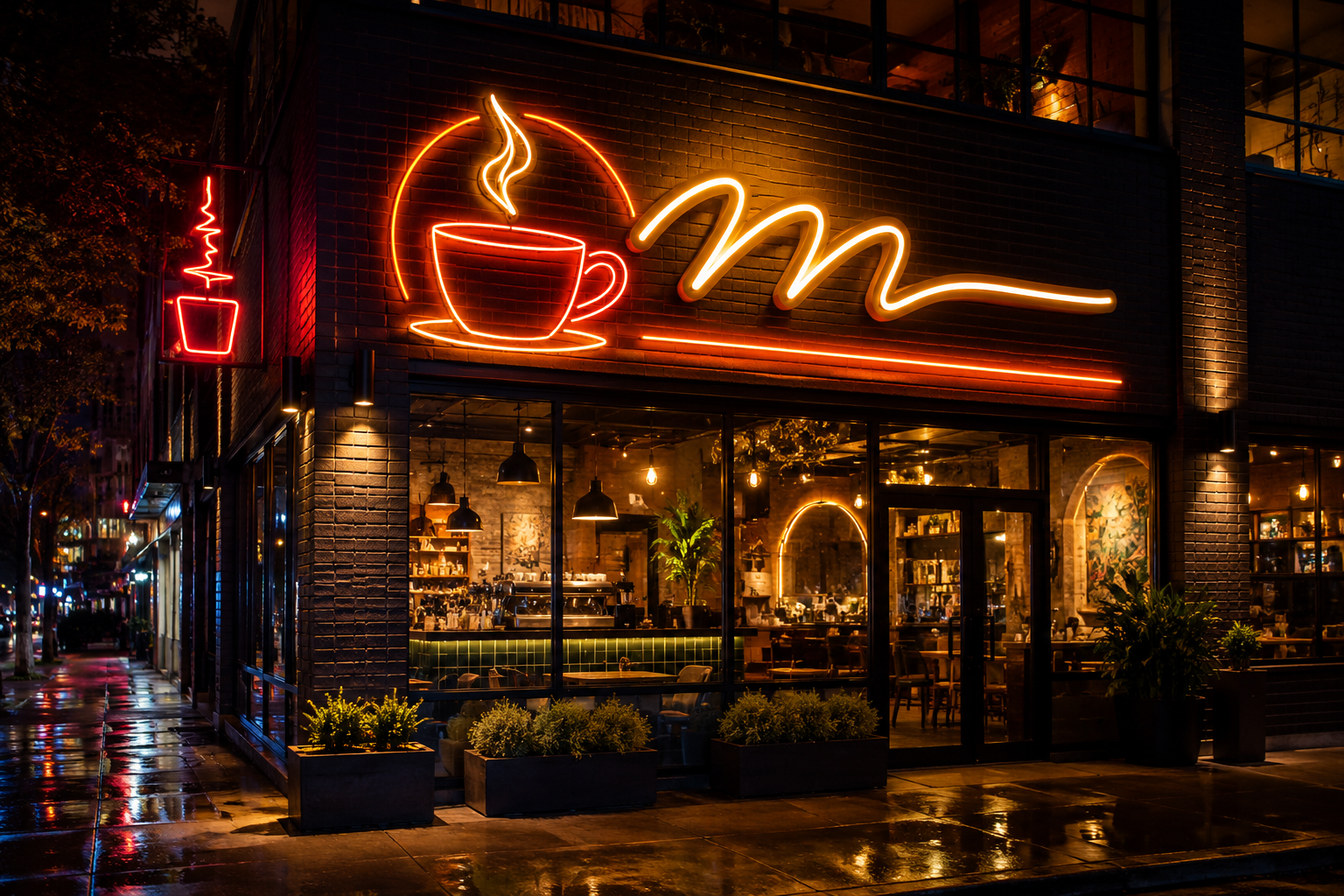
People usually read a sign before they form an opinion about the business, so a clear, well-lit one is doing quiet work on your first impression. A few things neon has going for it:
- The glow does most of the heavy lifting at night, but the tubing still adds color and shape in daylight.
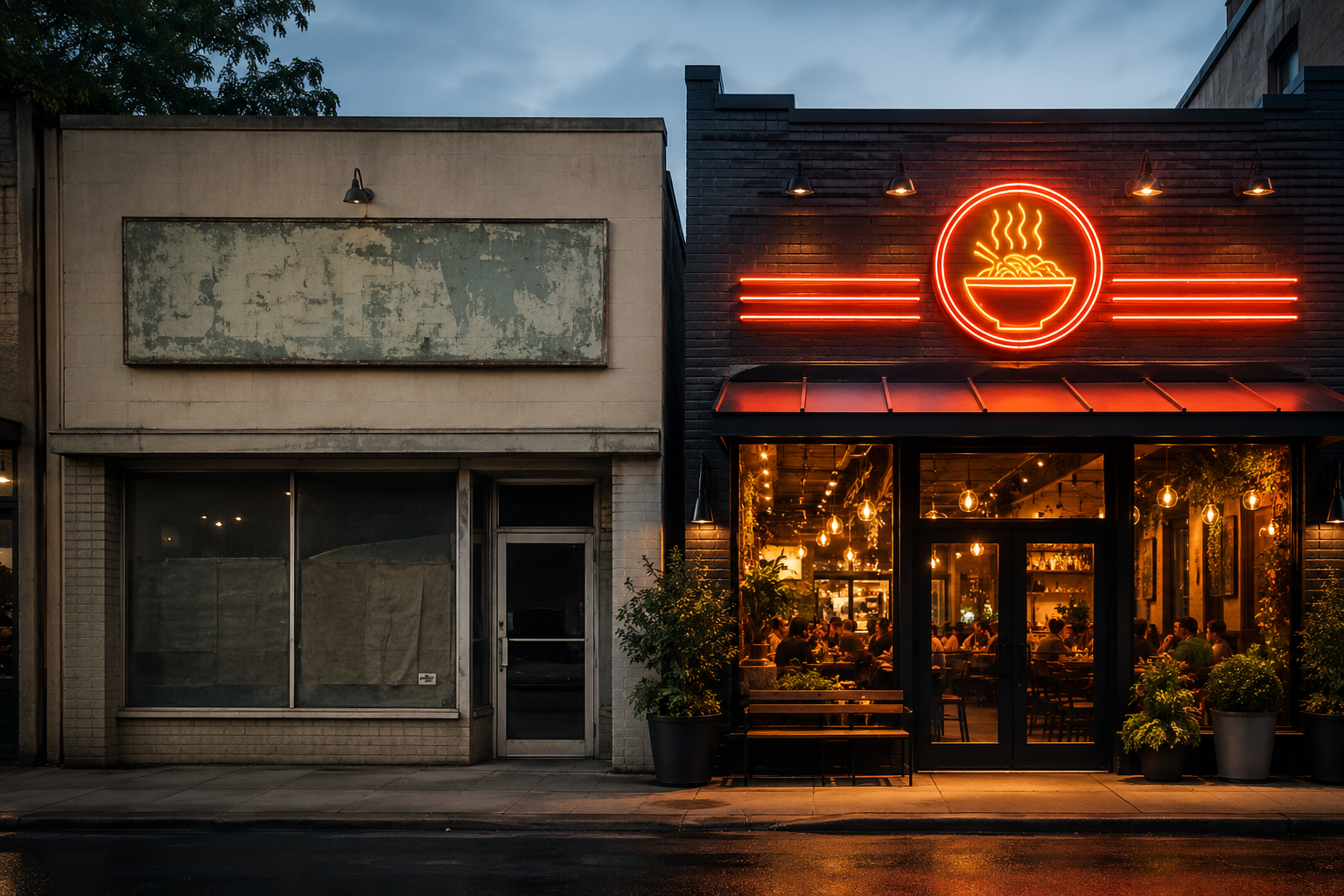
- In a row of similar storefronts, a distinct neon look helps you read as different from your neighbors.
- A memorable, well-placed sign gives people an easy way to describe and find you.
- The clean stroke of neon tubing keeps a name or logo legible from a distance.
When you're thinking about visibility, walk the sightlines in your head. How does the sign look to someone coming by car, on foot, or from across the street, and is anything in the way?
Choosing style and fit
The right neon sign has to balance three things: your brand, the building it hangs on, and the practical stuff like durability, indoor or outdoor use, and upkeep. A design can look great in a rendering and still be wrong for the wall it ends up on.
Glass neon vs. LED neon
Both give you the classic neon look. They just behave differently once they're up and running.
| Consideration | Traditional glass neon | LED neon |
|---|---|---|
| Look | Warm, handmade glow with a vintage feel | Similar glow from flexible LED tubing |
| Durability | Glass is more fragile, so handle with care | Flexible polymer resists breakage better |
| Design flexibility | Great for intricate, custom bends | Handles a wide range of shapes and sizes |
| Power draw | Usually higher | Usually lower |
| Common fit | Retro diners, galleries, upscale bars | Contemporary retail, restaurants, offices, indoor accents |
Glass neon has a handmade character that suits some brands more than others. LED neon gives up a bit of that artisan quality for durability and lower power draw, and because it runs cooler and safer, it's a common pick for indoor pieces the public gets close to.
Matching the sign to your brand and building
Think about the personality first. A playful, multi-color piece can suit a cafe or a toy store, while a single-color, understated design tends to fit a boutique or a clinic. The sign should extend whatever customers already feel about you, not argue with it.
Then the building. Size and placement have to work with the facade. An oversized, very bright sign can swamp a small or historic building, and a too-small one gets lost on a large storefront. If you send photos of your location, a sign specialist has a much easier time judging the fit.
Indoors versus outdoors changes the build. Outdoor signs need weather-resistant construction and sealed electrical components. Indoor pieces, like lobby signs, wall art, or a reception feature, give you more design freedom, though brightness and heat still matter for a comfortable room. Signage.com carries both indoor signs and outdoor-ready options.
To see how a concept actually reads on your storefront, the Design Studio lets you drop a sign mockup onto a photo of your space and compare letter style, color, and scale. It takes some of the guesswork out of a visual decision before you request a quote. Treat it as a preview, not as final fabrication, permit, or installation documentation.
Placement and practical planning
Design gets the sign noticed. Placement and setup keep it visible, safe, and working for years. A few things worth sorting out, and confirming with the right people, before anything goes up:
- Line of sight. Note the spots customers approach from, and check that trees, awnings, or a neighbor's sign won't block the view.
- Height and scale. Readable from a distance, but still in proportion to the building and what's around it.
- Mounting surface. Brick, stucco, metal, and glass each need different hardware to hold securely.
- Power access. Both glass and LED neon need an electrical connection, so plan for discreet, accessible wiring, and weatherproofed parts on anything outdoors.
- Codes and approvals. Local zoning and sign ordinances can limit size, brightness, type, and how far a sign projects, and landlords often have rules of their own. Requirements vary by municipality and property, so it's worth checking, or working with a qualified local installer or permitting professional, before you lock in a design.
- Installation. Between the electrical work and the mounting, it's usually worth having an experienced installer do the job so it ends up safe and secure.
A sign is on public display. One that's crooked, dim, or half-lit works against the impression you paid for, so it pays to plan the placement carefully.
How neon compares to other lit signs
Neon isn't your only lit option. Setting it next to channel letters and lightbox signs makes it easier to match the sign type to your location, your audience, and what you're going for.
| Sign type | Character | Often chosen for |
|---|---|---|
| Neon (glass or LED) | Glowing outline or fill with artistic curves | Distinct style, atmosphere, indoor accents |
| Channel letters | Individual 3D letters lit from inside | Clean, modern, professional storefronts |
| Lightbox (LED cabinet) | Enclosed box with a translucent, lit face | Detailed logos, menus, multi-line graphics |
Channel letters come in a few lighting styles. Front-lit letters push light forward through an acrylic face for direct brightness. Halo-lit (backlit) letters glow against the wall behind them for a softer look. Combination-lit blends the two. They're easy to customize in font, size, and color, and they tend to hold up better than glass neon.
Lightbox signs light a whole translucent face from within, which works for detailed logos or multi-line information like a menu. You get even illumination across a bigger surface.
Reach for neon when you want a distinct, memorable style, a particular mood, a personality that leans playful or artistic, or an eye-catching indoor accent. Lean toward LED neon when durability and lower power draw are the priority. If a different lit sign turns out to be the better fit, Signage.com also offers channel letter and lightbox options.
Maintenance and longevity
Both glass and LED neon are built to last, and a little routine care keeps either one looking right.
Glass neon is more fragile, so it appreciates some protection from knocks and an occasional dusting. Repairs, like replacing a tube section or a transformer, are best left to a skilled neon technician. It generally draws more power than LED, especially with older transformers.
LED neon uses durable flexible tubing that resists breakage and wipes clean with a soft cloth. Manufacturers typically rate it for many thousands of hours, though the real lifespan depends on the product, how much you run it, and the environment.
Either way, a quick look now and then helps. Watch for flickering, dimming sections, or visible damage, and deal with small problems before they turn into big ones. On outdoor signs, keep the power supply and wiring protected from the weather. When you request a quote, it's fair to ask about the recommended care routine and any warranty terms for your specific sign.
Where this leaves you
Picking a neon sign really comes down to visibility, personality, and fit. Glass neon gives you handcrafted warmth. LED neon gives you durability and lower power draw. Past the material, the decisions that shape the result are placement, scale, indoor or outdoor construction, and how well the design reflects your brand and suits your building.
A sensible next step is to picture the sign on your actual space and pull together the details you'd need for a quote. The Design Studio can help you visualize a concept, and you can explore neon options to see what fits your storefront or interior.
FAQ
What's the difference between glass neon and LED neon? Glass neon uses gas-filled glass tubes for a classic, handcrafted glow, but it's more fragile. LED neon uses flexible LED tubing to copy that look with more durability and generally lower power draw.
Is neon a good fit for any type of business? Neon, and LED neon in particular, is flexible enough for retail, restaurants, offices, salons, and more, especially when you want a distinct or artistic look. The trick is choosing a style and brightness that suit your brand and setting.
Does neon use a lot of power? Glass neon generally pulls more power than LED neon. LED is more energy-efficient, which is part of why a lot of businesses pick it for signs that stay lit for long stretches.
How do I keep a neon sign visible at night? Choose a suitable brightness, put the sign where approaching customers can see it clearly, and keep the sightlines free of things like trees or awnings.
Can I get a fully custom design? Yes. Neon can be shaped into custom logos, lettering, and graphics. The Design Studio can help you visualize a custom concept on your space before production.
What details help when requesting a quote? Useful things to share include your business type, logo or brand assets, whether you want glass or LED neon, an approximate size, indoor or outdoor placement, photos of your site, and any material or timing preferences.
