


If you're comparing sign materials for a storefront, lobby, or building exterior, metal usually makes the shortlist for one reason: it reads as permanent. A well-made metal sign holds up to weather and daily wear, and it tends to project a clean, established look. That kind of first impression can help with credibility before a customer walks in.
This guide is for buyers who are close to ordering. It covers how the common metals differ, how to match material to an indoor or outdoor setting, what lighting adds, and which details to gather so a quote conversation moves quickly.
Key takeaways
- Metal is a good fit when you want durability and a polished, professional look.
- Aluminum, stainless steel, and bronze each come with different strengths, finishes, and price points.
- Let the environment drive the material. Outdoor exposure calls for corrosion resistance; indoor settings give you more room to focus on looks.
- Lighting (front-lit, halo-lit, or external) affects nighttime visibility and the overall feel of the sign.
- Landlord rules and local permitting can shape size, materials, projection, and lighting, so check them early.
- A visual mockup can help you picture finishes and proportions before you commit.
- Having a few key details ready makes for a faster, more accurate quote.
Why metal signs hold up
Metal signs tend to last because the base materials shrug off weather, impact, and everyday wear better than plastic or temporary alternatives. The specific metal matters, though. Each one behaves differently outdoors and carries its own look.
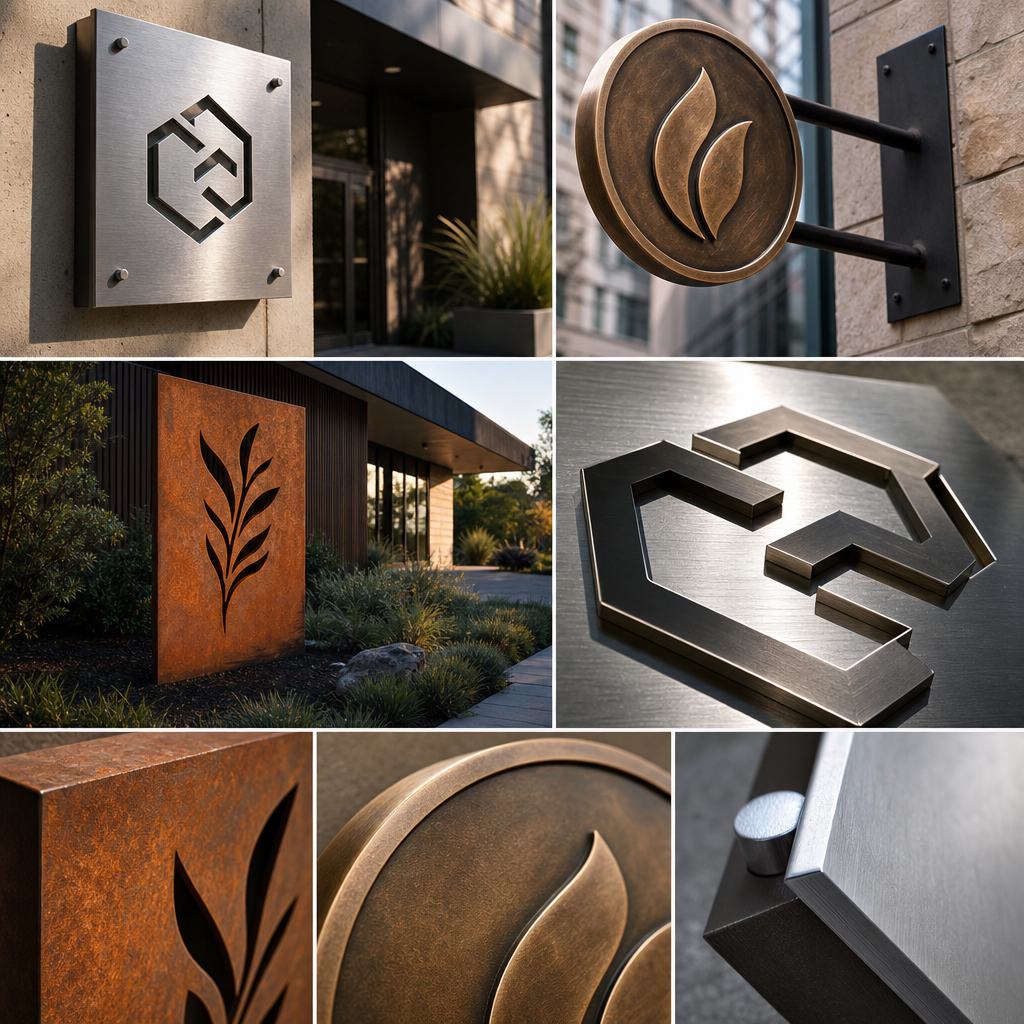
| Metal | Character | Typical use | Notes |
|---|---|---|---|
| Aluminum | Lightweight, corrosion-resistant, versatile | Dimensional letters, cabinet signs, many storefront signs | Can be painted, brushed, or anodized; balances durability and cost |
| Stainless steel | Strong, resists rust and tarnish, modern | Higher-end storefronts and corporate signage | Sleek finish that holds up well over time |
| Bronze | Classic, develops a natural patina | Professional offices, historical districts | The evolving patina is part of the appeal for many buyers |
A common mistake is picking a metal that doesn't suit the setting. Untreated steel used outdoors, for instance, can rust and undercut the look you paid for. Matching the metal and its finish to the actual exposure is what protects the money you put in. A sign often gets judged before the business does, so durable materials help it avoid looking neglected.
What metal does for a brand
Past durability, metal signage tends to feel substantial. Clean edges, precise lettering, and some depth all read as quality and stability to a lot of customers.
Dimensional letters cut from solid metal or metal-faced material add depth and a tactile quality that flat signs can't match. Paired with lighting, they stay legible day or night. Engraved or etched signs are a quieter option, well suited to lobby signs, medical office signs, and corporate settings where understatement does the talking. And contrasting finishes (brushed, polished, matte, anodized, sometimes combined with acrylic or wood) let you tune the sign to your brand without making it loud.
By comparison, faded plastic or a temporary banner can make an otherwise solid business look less established. A crisp metal sign works as a quiet trust signal, and much of that impression forms before anyone reaches the door.
Matching metal to indoor or outdoor use
The setting should drive the material. Outdoor signs need weather resistance and structural strength. Indoor signs can lean into detail and finish.
For outdoor work like storefront signs, monument signs, and pylon signs, corrosion-resistant metals such as aluminum or stainless steel are the usual starting point. Climate matters too. Extreme heat, cold, humidity, or coastal salt air can all affect the metal and finish, and treatments like powder coating can add protection.
Indoors, with lobby signs, wayfinding, and office signs, you have more room to prioritize appearance. Brushed aluminum, polished brass, or copper can create a refined look with weather out of the picture. The main questions become how the metal works with your interior design and lighting.
As a rough guide: for outdoor signs in demanding climates, favor stainless steel or treated aluminum and put longevity first. Indoors, you have more freedom to pick metals like brass or bronze for visual impact and brand consistency.
Lighting options
Lighting extends a sign's visibility into the evening and shapes its feel. It matters most for restaurants, retail, and any business that stays open after dark.
Front-lit channel letters project light through the face of each letter, which is a straightforward choice when you need to be read clearly from a distance. Halo-lit (backlit) channel letters put a soft glow behind the letters so they silhouette against the mounting surface, a look often chosen for upscale or professional settings. Open-face channel letters expose the internal LED or neon for a bright, retro effect, though that's less common with all-metal builds. And external lighting, using floodlights or gooseneck fixtures, lights flat signs, monument signs, or blade signs without internal wiring.
Lighting affects both legibility and mood, and it can influence material and construction choices, so it's worth deciding early.
Fitting a metal sign into your other signage
A metal sign works best as part of a consistent set rather than a one-off piece.
Keep fonts, logo, and colors aligned with your other materials so the sign supports the rest of your brand instead of fighting it. Think about placement too: sightlines, foot and vehicle traffic, and possible obstructions. A durable sign only pays off if people can actually see it.
Before you order, confirm any landlord requirements for storefront signs and check local permitting rules. These can affect size, materials, projection, and lighting. Sorting it out early helps you avoid rework later.
If you're planning exterior placement, our outdoor signs collection is a useful place to see how different metal options come together.
Getting a quote for a custom metal sign

An accurate quote depends on a few specifics. Pulling these together before you reach out keeps the conversation efficient and cuts down on guesswork:
- Logo and brand assets: high-resolution vector files (AI, EPS, SVG) plus any brand fonts, which help with precise fabrication.
- Sign type: dimensional letters, channel letters, flat cut letters, or a mix.
- Location: indoor or outdoor, since this shapes material and lighting options.
- Approximate size: rough measurements for the area you have in mind.
- Mounting surface: where it will attach (brick, stucco, glass, above an awning, and so on).
- Lighting: internal (front-lit, halo-lit), external, or none.
- Material preferences: if you already have aluminum, stainless steel, or bronze in mind.
- Photos of the location: useful context for tailored advice.
- Timeline: your ideal timeframe, with the understanding that specifics get confirmed during the quote process.
If it helps to picture a concept first, Signage.com's Design Studio lets you explore finishes and proportions as a visual mockup, so you can see options side by side before you formalize a request. Final engineering, fabrication, and installation details are handled separately as part of the quote process.
When you're ready, you can request a free quote and share the details above to get started.
FAQ
Which metals are commonly used for outdoor business signs? Aluminum and stainless steel come up often outdoors because they resist corrosion and weathering well. The right fit depends on your climate and the look you're after.
Can metal signs be illuminated? Yes. Common approaches include front-lit and halo-lit channel letters, plus external lighting with floodlights or gooseneck fixtures.
Do metal signs work well indoors? They can. Lobby signs, office signs, and wayfinding signs in metals like brushed aluminum, brass, or bronze add a refined, durable element to interior branding.
How does a metal sign affect first impressions? A clean, well-made metal sign tends to signal quality and permanence, which can support customer confidence before anyone steps inside.
What should I prepare to get a quote? Have your logo files, intended sign type, indoor or outdoor location, approximate size, mounting surface, lighting preferences, and photos of the site ready.
How do I choose between aluminum, stainless steel, and bronze? Start with the environment and the look you want. Aluminum is versatile and cost-friendly, stainless steel gives a modern and sturdy finish, and bronze offers a classic look that develops a patina over time.
Next steps
Metal is a solid option when you want signage that lasts and looks established. Aluminum and stainless steel handle outdoor exposure well, while indoor settings open the door to metals like brass and bronze chosen mainly for their look. Matching the material and finish to the setting, planning the lighting, and checking landlord and permitting requirements early all help you land on a sign that fits your brand and your space.
When you're ready to move forward, gather the details above, explore finishes with a visual mockup if it helps, and start your quote to talk through the specifics.
