


Picking a sign material is really a stack of smaller decisions. Where will the sign live? How should it look? Does it need to light up? How much upkeep are you willing to sign on for? The same logo can look sleek in acrylic, solid in metal, or warm and handmade in carved HDU, and each one behaves differently once it's on a wall and dealing with weather.
This guide covers the materials you'll run into most for custom business signs: acrylic, metal, PVC, HDU foam, and wood. The idea is to narrow your shortlist before you ask for a quote, so the conversation with a sign maker starts somewhere instead of from scratch.
Key takeaways
- Location sets the shortlist. Outdoor signs need weather-tolerant materials (many metals, UV-stable acrylic, HDU foam). Indoor signs give you more room, including PVC and thinner acrylic.
- Each material carries a different feel. Acrylic looks clean and current, metal looks solid, wood and carved HDU look handmade.
- Lighting narrows it more. Translucent acrylic is common for lit faces, and aluminum usually forms the structure of channel letters and lightboxes.
- Upfront cost and upkeep pull against each other. Cheaper materials can mean more maintenance later; sturdier ones often cost more to start.
- Building and landlord rules matter. Property managers and municipalities often set their own requirements for materials, size, and mounting. Worth checking early.
- A mockup cuts guesswork. Seeing a material on your own storefront before production makes it easier to compare options.
What are the most common business sign materials?
For custom signage you'll mostly see acrylic, metals (usually aluminum and stainless steel), PVC, high-density urethane (HDU) foam, and wood. Each one mixes look, weight, weather tolerance, and cost differently, which is why no single material fits every sign.
Acrylic: versatile and modern
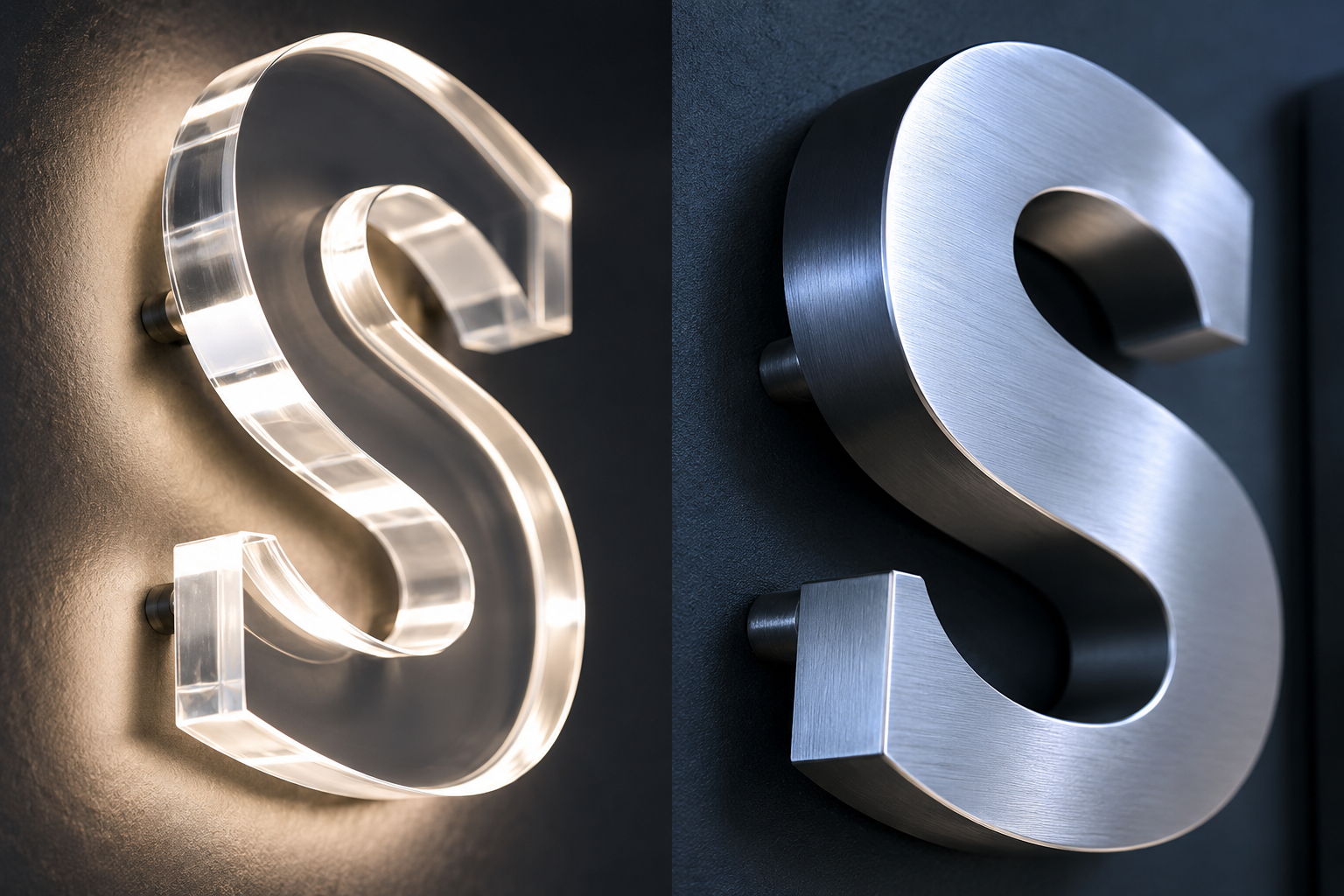
Acrylic is a clear, glossy plastic that cuts into shapes, layers well, and lights from behind. You see it a lot on dimensional letters, lobby signs, and illuminated signage where the goal is a clean, current finish. It's lightweight, shatter-resistant, transmits light well, and comes in plenty of colors and finishes, from gloss to matte to frosted.
Where it tends to show up: dimensional letters, lit and unlit, for a smooth storefront or office look; channel letter faces, lightbox faces, and backlit signs, where the translucence lets light pass through; lobby and interior signs for reception areas, medical offices, and retail; and directory or tenant panels in multi-tenant buildings.
It reads clean and professional, and it works indoors or out. UV-stabilized grades help it resist fading, cracking, and yellowing over time. The common misstep is speccing thin, under-supported acrylic for a large exterior sign, which can flex or warp. Match the thickness and mounting to the size and where it hangs.
Metal: durable with a solid feel
Metal holds up outdoors and reads as substantial. Aluminum, stainless steel, bronze, and copper are all common, each with its own finish options and character. It's durable and weather-tolerant, comes in brushed, polished, anodized, or painted finishes, and can be cut, etched, or cast.
You'll find it on channel letters, where aluminum usually forms the returns (the sides) and backs because it's workable and handles the outdoors. Flat-cut or fabricated metal letters give a substantial look indoors or out. Metal cladding adds structure and a clean finish to larger monument and pylon signs, and it's a frequent pick for architectural signage where you want a lasting presence.
Different metals age differently. Stainless steel in particular resists rust. The thing people forget is weight: solid metal is heavy, so the mounting surface matters, and some finishes need upkeep (untreated copper and bronze can tarnish, for example).
How do PVC, HDU, and wood compare?
PVC, HDU foam, and wood cover a different set of needs, whether that's lighter weight, carved detail, or a natural look, often at a different price than metal or acrylic.
PVC: lightweight and economical
PVC is a rigid, smooth plastic sold in sheet form that's easy to cut and print on. It's often one of the more economical rigid options: lightweight, rigid, smooth, easy to fabricate, and reasonably chemical-resistant.
It works well for indoor office signs (lobby, directional, wall signs) where a clean, budget-conscious option does the job. It also suits shorter-term outdoor use, or cases where weight is a concern, and it's a decent alternative to acrylic or metal for flat-cut letters when you want a specific color or matte finish at a lower cost.
It's clean and simple, though it can look less premium than acrylic or metal if the design doesn't carry it. Indoors it's fine; outdoors it's moderate, and it can turn brittle in hard cold or flex in high heat without proper support. Think multi-color indoor point-of-sale signs, or menu boards where the content changes often.
HDU foam: carved detail and weather tolerance
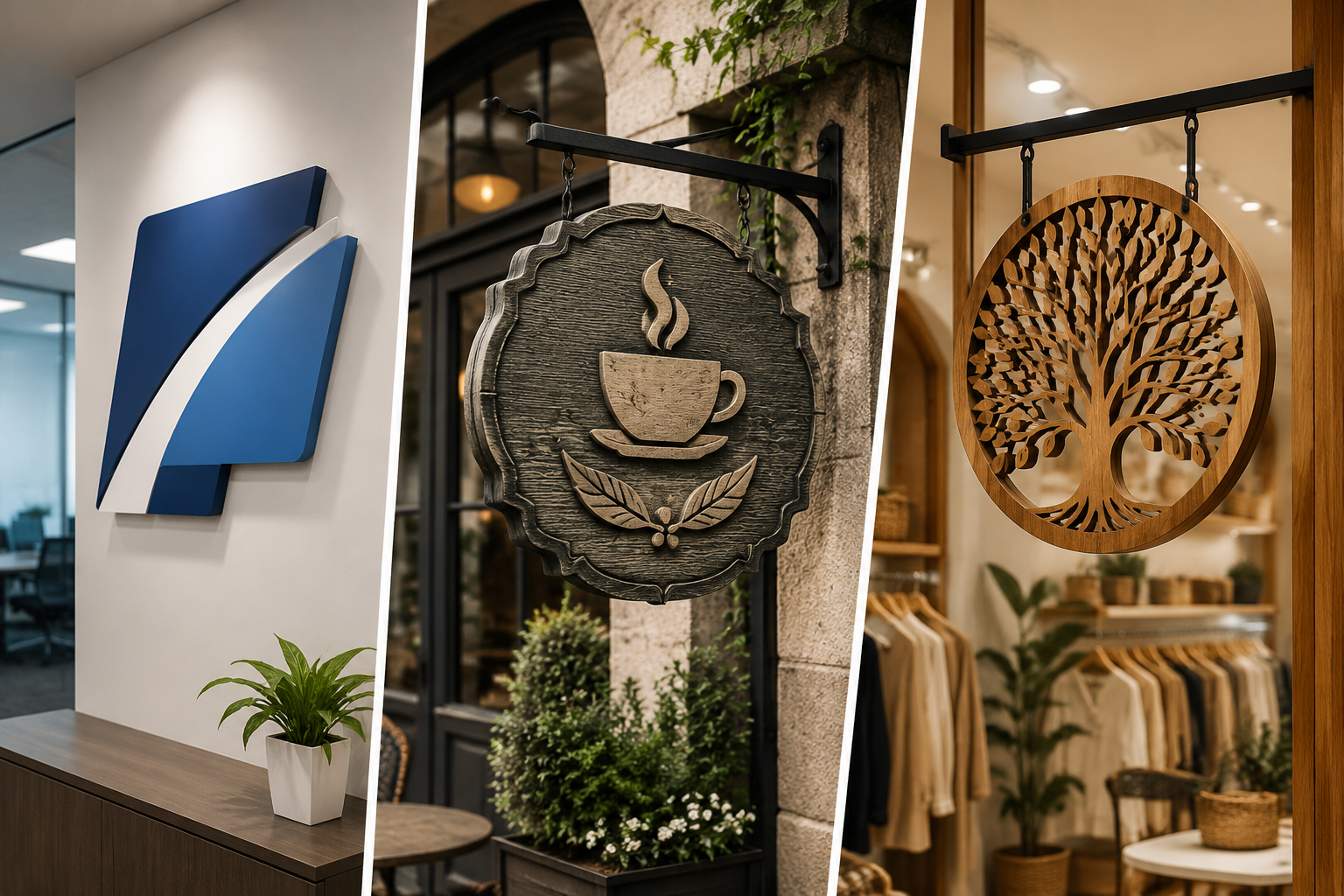
HDU foam is a rigid, closed-cell material that's waterproof and made for carving, so it can imitate carved wood without wood's upkeep. It's lightweight, resists cracking and warping, and takes carving, sandblasting, and paint well.
It's a go-to for carved signs with a sculpted, dimensional look on cafes, boutiques, and restaurants. Because it's waterproof, it resists rot, insects, and warping in a lot of climates, which makes it a fit for weather-exposed outdoor signs. It also works as a durable, lightweight core for monument and post-and-panel signs that get painted and textured to match a brand.
The look is traditional and textured, and it usually needs less upkeep than natural wood. If you want carved-wood character with lower outdoor maintenance, this is often where people land.
Wood: natural and classic
Wood brings a warm, natural look that suits rustic, artisan, or heritage brands. The grain can be carved, routed, painted, stained, or left bare.
It fits boutique and cafe storefronts, interior signs that want an earthy feel in reception areas or conference rooms, and engraved or carved pieces that show off grain and texture. It reads organic and authentic.
Durability varies a lot by species and treatment. Outdoor wood generally needs regular sealing to limit warping, rot, and insect damage, so it asks for more upkeep than synthetics or metal outside. That's a maintenance commitment worth factoring in from the start.
How does durability differ across materials?
Longevity comes down to the material's properties and how it handles sun, moisture, and temperature swings, which matters most for outdoor signs. Fabrication and mounting quality count too: a well-installed moderate material can outlast a poorly installed sturdy one.
| Material | Outdoor durability | What helps longevity | Points to watch outdoors |
|---|---|---|---|
| Metal | Strong | Resists impact, corrosion (especially stainless steel), UV, and temperature swings. | Can dent; some metals tarnish without a protective finish. |
| Acrylic | Good | UV-stable grades hold color and resist yellowing and cracking. | Can scratch; some grades may flex in extreme heat without support. |
| HDU foam | Good | Waterproof, resists rot and insects, holds paint. | Can be prone to impact damage if thick and exposed. |
| PVC | Moderate | Resists moisture, lightweight, holds paint. | Can turn brittle in extreme cold or flex in high heat without support. |
| Wood | Variable | Natural look; strength depends on species. | Prone to rot, warping, insects, and fading; needs regular sealing. |
Which materials work for illuminated signs?
For signage that lights up, translucent acrylic is a common pick for the parts that need to glow, while aluminum usually forms the structure. The right combination depends on how the sign should light.
- Front-lit channel letters: colored translucent acrylic faces let interior LEDs shine through, with aluminum returns for structure.
- Halo-lit (reverse-lit) channel letters: opaque metal or acrylic faces make a solid letter, and light emits from the back onto the wall for a halo effect.
- Lightbox and cabinet signs: a translucent acrylic or polycarbonate face over internal LED modules gives even illumination, usually in an aluminum cabinet.
- Open-face channel letters: the letter front is left open to expose the lighting element for a classic, vibrant look, on an aluminum structure.
If lighting is part of the plan, describe the effect you want to your sign maker. They can suggest a combination that reads well day and night.
How do material choices affect maintenance and cost?
Material shapes both what you pay upfront and how much upkeep the sign asks for later. As a rough pattern, more specialized or durable materials cost more at the start but tend to need less routine maintenance.
Cost, in general terms:
- Acrylic sits mid-range. Price moves with thickness, color, and finish, and clear or standard colors run cheaper than custom colors or specialty finishes.
- Metal runs higher upfront. It varies by metal, gauge, finish, and fabrication complexity, and stainless steel often costs more than aluminum.
- PVC is often one of the more budget-conscious rigid options, thanks to low material cost and easy fabrication.
- HDU foam is mid-range to higher. The material itself is moderate, but carving and finishing add to the total.
- Wood is mid-range to high depending on species, size, and carving detail. Exotic woods and intricate work cost more.
Maintenance, in general terms:
- Metal is usually low: periodic cleaning for most finishes, with stainless steel resisting staining and corrosion well.
- Acrylic is easy to clean with mild soap and water. Skip abrasive cleaners that scratch it. Generally low upkeep.
- HDU foam is low outdoors. Paint holds and it resists rot and warping, so cleaning is typically enough.
- PVC is low indoors and easy to wipe down. Outdoors, protect it from temperature extremes where you can.
- Wood is the most work outdoors: periodic cleaning, re-sealing, or re-staining to guard against moisture, UV, and pests.
When you request a quote, ask about expected lifespan and recommended maintenance for the materials on your shortlist. Coming in with a clear sense of your budget and how much upkeep you'll take on makes that conversation more useful.
What factors should guide your material choice?
Picking a material is a practical decision as much as an aesthetic one. These are the factors that tend to carry the most weight:
- Indoor vs. outdoor. Outdoor signs face sun, rain, wind, and temperature swings, so aluminum, stainless steel, UV-stable acrylic, and HDU foam are common picks. Indoor signs allow more flexibility, including PVC and thinner acrylic.
- Look and brand identity. Polished acrylic and brushed aluminum lean modern; carved HDU, stained wood, and bronze lean traditional; colored acrylic and LED-neon styles lean vibrant.
- Budget and long-term value. Weigh upfront cost against durability and upkeep. A cheaper material that needs frequent attention can cost more over its life.
- Illumination needs. If the sign has to read at night, translucent acrylic faces and aluminum structure are typical. Non-illuminated signs open up more options.
- Building and local rules. Property managers and municipalities often set requirements for size, projection, lighting, and materials. Confirm before you commit.
- Mounting surface. Wall type (brick, stucco, glass, paneling) and its structure affect acceptable weight and mounting method. Heavier metal signs need solid support.
- Scale and viewing distance. Signs read from a distance favor bold, durable materials; close-up interior signs let fine texture and detail show.
Once you have a shortlist, Signage.com's Design Studio can help you picture how different materials, letter styles, and lighting might look on your own building or storefront. It's a visual mockup aid for comparing directions before production, not final engineering, permit, fabrication, installation, or code-compliance documentation, which your sign maker handles separately.
A quick way to decide
There's no single right material, just the one that fits your location, brand, budget, and upkeep tolerance. Acrylic leans clean and modern, metal reads solid, PVC keeps things light and economical, HDU foam gives you carved detail with good weather tolerance, and wood brings natural warmth at the cost of more maintenance outdoors.
Start with where the sign will live and how it should feel, weigh cost against upkeep, and factor in lighting and building rules early. When you're ready to see options side by side, try a visual preview in Signage.com's Design Studio, or request a quote to talk through the details.
FAQ
Which sign materials hold up well outdoors? Metals like aluminum and stainless steel are common for exterior signs because they tolerate weather, corrosion, and impact. UV-stable acrylic and HDU foam are also used outdoors. Actual longevity depends on grade, finish, fabrication, and mounting.
Can I combine different sign materials? Yes. Many custom signs mix materials. Aluminum channel letters with acrylic faces for illumination, or HDU foam with metal accents for contrast, are both common.
Which materials work best for illuminated signs? Translucent acrylic is a common choice for lit faces because it lets light pass through, while aluminum is typically used for the structural parts of channel letters and lightboxes.
How do I match a material to my brand? Think about the impression you want, whether that's modern, traditional, or rustic, along with your audience and setting. Acrylic tends to read modern, while carved wood or HDU reads more handcrafted.
What details help when requesting a quote? Your logo, the sign type, indoor or outdoor location, approximate size, photos of the mounting area, and any material preferences all help a sign maker respond accurately.
Is wood a good option outdoors? Wood offers a classic look but generally needs regular sealing and upkeep to limit warping, rot, and fading outdoors. HDU foam is a lower-maintenance alternative that can mimic the look of carved wood.
Which material is the most economical? PVC is often among the more budget-conscious rigid materials, especially for indoor or shorter-term outdoor use. The right choice still depends on durability and upkeep needs.
Can Signage.com help me visualize different materials? Yes. Signage.com's Design Studio is a mockup tool for previewing materials, styles, and lighting on your storefront or building, so you can compare directions before production.
