


Quick answer
Start with aluminum, aluminum composite material (ACM/Dibond), and stainless steel if you want something that lasts. Acrylic and higher-grade PVC come into play for a particular look or a tighter budget. Aluminum handles rain, sun, and wind and does not rust. Stainless steel gets picked a lot in coastal or humid spots. ACM gives you a flat, clean panel at a moderate price. What actually fits your storefront depends on your climate, your sign type, and how many years you need it to keep looking sharp.
Key takeaways
- Aluminum is the everyday choice for a lot of outdoor signage. It resists rust, stays light, and lasts a long time when it is built and maintained well.
- ACM/Dibond suits flat panel signs and channel letter backs.
- Stainless steel tends to show up in coastal, humid, or higher-end jobs.
- Acrylic looks sleek but can yellow or crack in direct sun without UV protection.
- PVC and corrugated plastic fit short-term or lower-exposure signs more than permanent storefronts.
- Vinyl is a face material, not a structural one. It works best as an overlay on aluminum or ACM.
- Climate, wind load, and salt exposure move the needle more than most buyers expect.
- People often see your sign before they see your business, so material affects first impressions and not just lifespan.
What materials should you consider?
For most storefronts, the shortlist is aluminum, ACM, stainless steel, high-impact acrylic, and UV-rated vinyl overlays. These take sun, rain, and temperature swings without warping, rusting, or fading fast.
Here is a rough comparison. Treat the lifespans as general ranges, not promises. Real results depend on fabrication quality, climate, exposure, and upkeep.
| Material | Typical outdoor life* | Often used for | Relative cost |
|---|---|---|---|
| Aluminum | ~15 to 20+ years | Channel letters, cabinets, panels | Mid to high |
| ACM / Dibond | ~10 to 15+ years | Flat panel signs, letter backs | Mid |
| Stainless steel | ~15 to 20+ years | Coastal, premium, dimensional letters | High |
| Acrylic | ~5 to 7 years | Lightbox faces, dimensional letters | Mid |
| PVC | ~3 to 5 years | Budget panels, short-term use | Low |
| Corrugated plastic | ~6 months to 2 years | Temporary, yard signs | Very low |
*General industry ranges only. Actual lifespan varies by climate, exposure, mounting, and upkeep.
Which materials tend to last longest?
Aluminum and stainless steel come up most often as long-lasting outdoor materials, with ACM panels close behind. Longevity really comes from three things pulling together: the base material, the finish, and the mounting.
A well-built aluminum channel letter sign with quality paint, UV-rated vinyl, and sealed LED components can go many years. A thin PVC panel in direct sun might warp inside one hot season. The material sets the ceiling. Fabrication and installation decide how close you get to it.
Lean toward long-life materials when you own the building, you signed a long lease, or re-installing signage would be a headache. Think medical offices, corporate lobbies, or restaurants with signage worked into the architecture.
Standing up to rain and sun
Aluminum, ACM, stainless steel, and UV-stabilized acrylic all hold up in wet, high-sun conditions. They shrug off water, and aluminum and stainless do not rust.
A few things worth knowing:
- Rain: aluminum and stainless will not rust. ACM has a plastic core that does not soak up water. Untreated wood usually shows moisture damage within a few seasons.
- Sun: UV wears down pigments and plastics. Ask for UV-rated vinyl overlays and outdoor-grade paint.
- Temperature swings: materials that expand and contract at different rates can crack at the seams. Single-material builds, all aluminum or all stainless, tend to age more evenly.
Aluminum vs wood vs vinyl
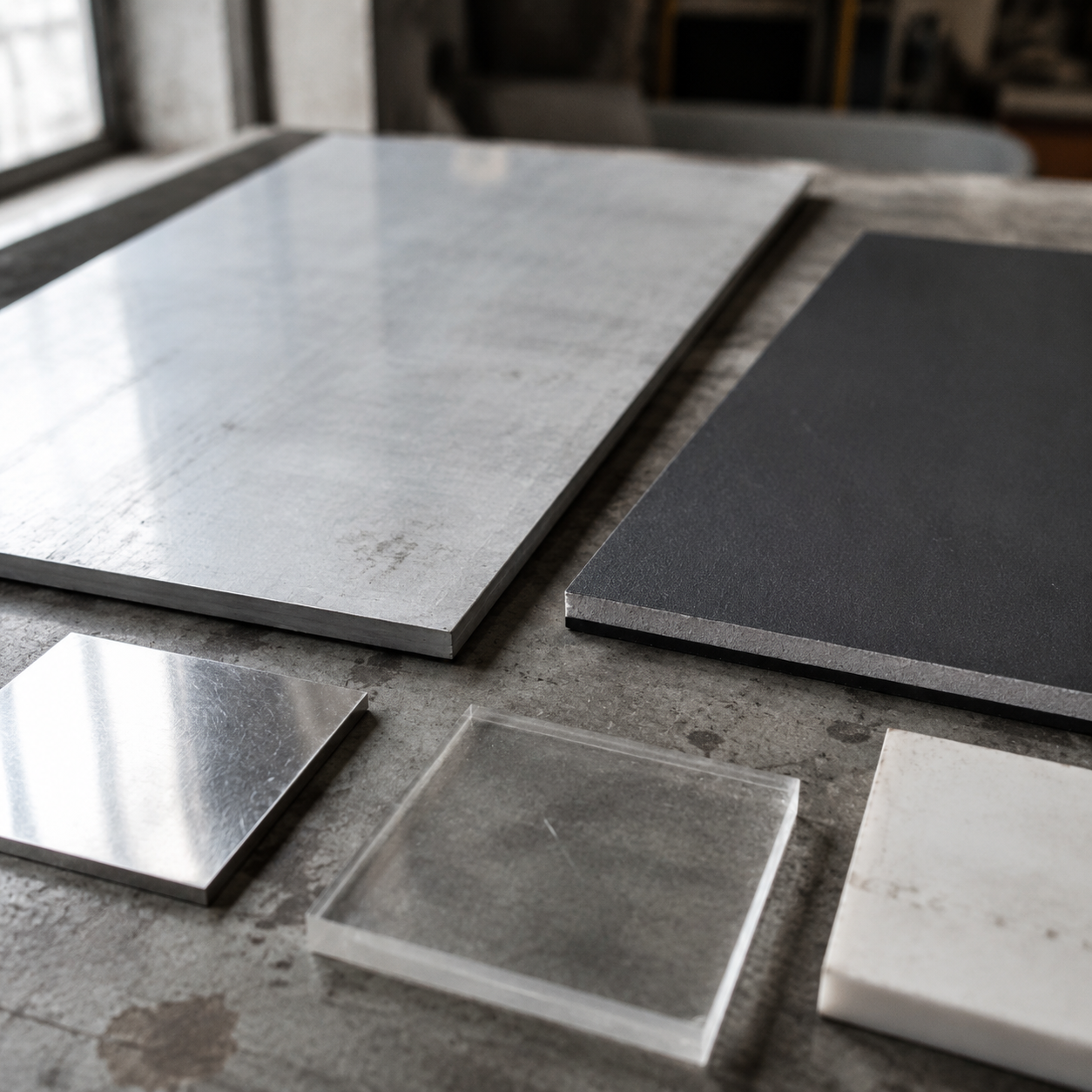
For most outdoor business signs, aluminum makes a better base than wood or vinyl. Wood looks warm and premium, but it wants ongoing sealing, staining, and repair. Vinyl is a graphic layer, not a structural base.
- Aluminum resists rust, stays light, and holds paint and vinyl well. Good for channel letters, cabinets, and panels.
- Wood suits boutique, farm-to-table, or rustic brands, as long as you plan for maintenance. It is a tougher fit in humid or high-sun regions.
- Vinyl works great as a printed face on aluminum or ACM. On its own it belongs on banners or wraps, not rigid long-term signage.
Rough rule: if people need to read your sign from across a parking lot for years, start with aluminum or ACM. Reach for wood when the brand look genuinely calls for it and you have a maintenance plan.
Materials that resist fading
Fade usually starts in the graphics, not the base. Painted aluminum with durable outdoor finishes, stainless steel, and UV-rated vinyl overlays on aluminum or ACM hold their color well. Acrylic can too, when it is UV-stabilized or protected by a vinyl overlay.
Worth asking your sign provider about:
- UV-rated cast vinyl instead of calendered vinyl for printed faces
- Outdoor-grade paint on aluminum
- Second-surface printing on acrylic, where the ink sits behind the face and the material shields it
Bright reds, purples, and oranges usually fade before black, white, or navy. If your brand color lives in that range, it can pay to spend on premium vinyl and expect to swap the face sooner.
What holds up in high wind?
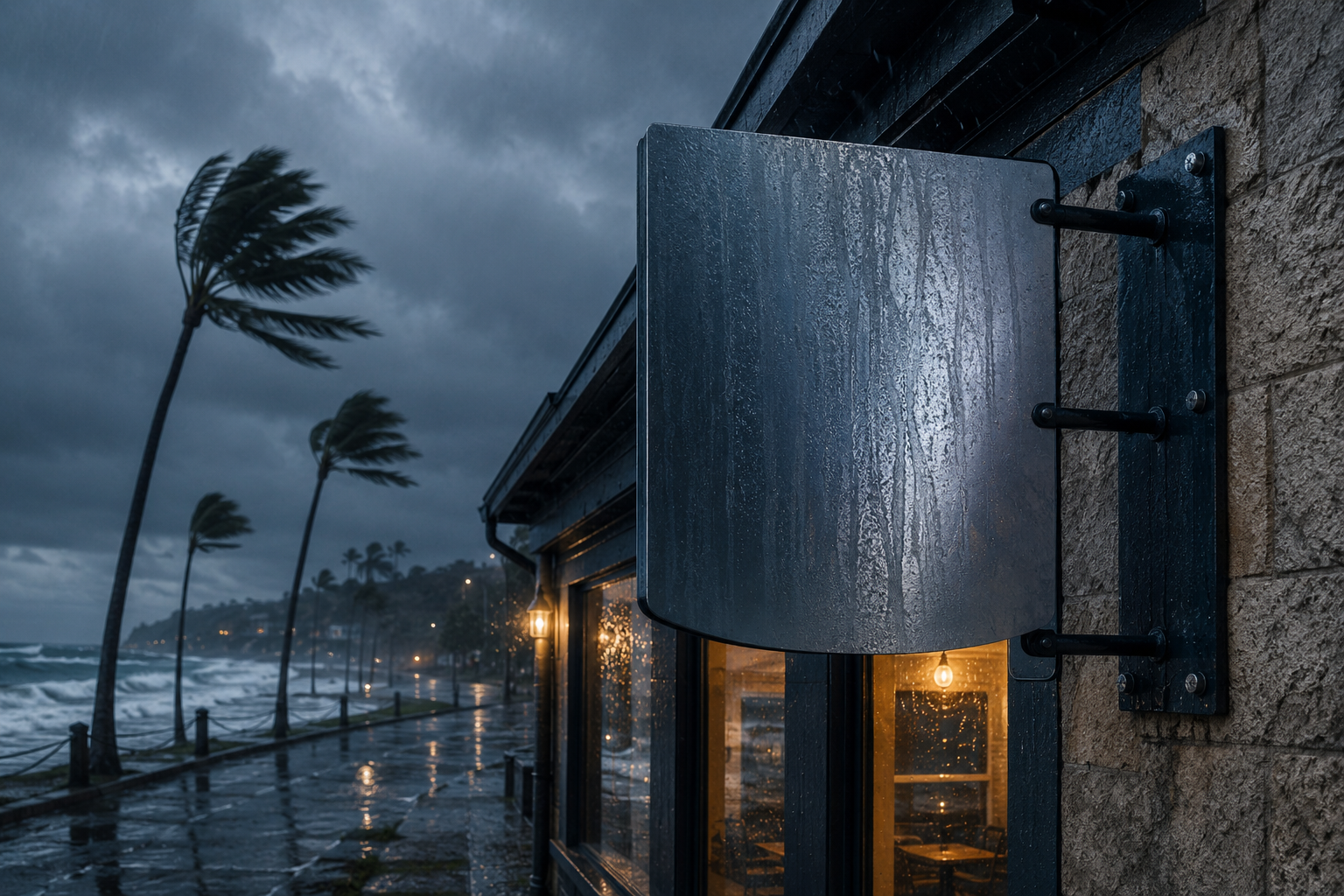
In windy areas, rigid metal signs (aluminum, ACM, or stainless steel) with reinforced mounting are the usual answer, sometimes with wind slots or perforations where it makes sense. Channel letter, monument, and pylon signs are often engineered with wind load in mind.
A few things that matter as much as the material:
- Mounting: anchors, raceways, and structural backing carry the load. A strong sign on weak anchors is still a risk.
- Shape: solid rectangular panels catch more wind than open builds like channel letters.
- Engineering: on larger pylon and monument signs, wind load calculations belong in the fabrication conversation. Structural sizing and code requirements are set by qualified engineers and local authorities, not by an online guide.
For general weather-planning guidance on outdoor work and installations, OSHA has resources at osha.gov/weather.
Can you use indoor sign materials outside?
Usually not. Indoor materials like standard acrylic without a UV rating, foam board, MDF, and untreated woods are not built for sun, rain, or temperature swings, and they tend to fail fast outdoors.
If you already have an indoor-style sign you want to move outside, ask a sign company whether a UV-rated overlay, protective coating, or new outdoor-rated substrate is realistic. Plenty of times, rebuilding with an outdoor material costs less than patching an indoor one over and over.
Budget-friendly options
If cost is the main constraint, look at PVC panels, ACM, and aluminum with vinyl graphics. ACM often lands in a decent spot between price and lifespan for a flat storefront panel.
- Tight budget, short-term: PVC panel with UV-rated vinyl
- Balanced value, medium-term: ACM panel with quality vinyl graphics
- Longer-term value: painted aluminum, especially for channel letters and cabinets
A common mistake is grabbing the cheapest option for a permanent location. A sign that looks cheap can make the whole storefront read that way, and that impression can cost more than the money you saved.
Winter maintenance
Winter care mostly means keeping surfaces clean, checking seals, and looking over the lighting. Salt, ice, and freeze-thaw cycles put the most stress on a sign.
A simple checklist:
- Rinse road salt off metal signs and mounting hardware after storms
- Check the seals around lightbox and channel letter openings for cracks
- Test LED modules and power supplies before peak season, not during it
- Clear snow buildup off monument bases and ground-lit fixtures
- Watch for water pooling on flat panel tops, which can signal a mounting or drainage problem
Coastal areas and salt spray
Salt air speeds up rust and paint failure, so near the ocean your material choice matters even more. Common coastal picks are stainless steel (marine grade where you can get it), painted aluminum with protective clear coats, and ACM. Untreated steel and low-grade metals corrode quickly in salt.
Near the coast:
- Choose stainless steel or aluminum over mild steel
- Ask about marine-grade finishes and sealants
- Plan on cleaning more often, especially hardware and fasteners
- Keep dissimilar metals from touching, which can trigger galvanic corrosion
Signs near water
Around lakes, rivers, pools, or docks, stainless steel and aluminum stay strong picks. Both resist moisture, and stainless takes constant humidity in stride. ACM works for flat signs, though sealed edges help keep moisture out of the core over time.
Untreated wood and untreated steel are poor choices here unless the sign is built with waterproofing and a maintenance plan from the start.
More eco-conscious materials
Greener options include recyclable aluminum, stainless steel, and reclaimed or FSC-certified wood. Aluminum is among the more widely recycled materials, and it tends to last long enough that you replace it less often.
To lower the impact:
- Pick longer-life materials so you replace less often
- Ask about LED illumination instead of older fluorescent lightbox lamps
- Consider recyclable aluminum panels over PVC where the design allows
- Reuse existing raceways or mounting during a rebrand when you can
Often the greenest sign is just the one you do not have to replace for years.
How long do the materials last?
Typical outdoor ranges, assuming professional fabrication and reasonable upkeep. These are estimates, not guarantees. Climate, exposure, mounting quality, and maintenance all shift the numbers.
- Aluminum: ~15 to 20+ years
- Stainless steel: ~15 to 20+ years
- ACM / Dibond: ~10 to 15+ years
- UV-rated acrylic: ~5 to 10 years
- Standard acrylic: ~5 to 7 years
- PVC: ~3 to 5 years
- Wood (sealed and maintained): ~5 to 10 years
- Vinyl overlays: ~5 to 7 years
- Corrugated plastic: ~6 months to 2 years
What drives the cost?
Outdoor sign costs move around a lot based on size, material, illumination, and installation, so no single number fits every project. As a loose reference, a small non-illuminated aluminum or ACM panel sits at the lower end, while illuminated channel letter sets, lightbox signs, monument signs, and pylon signs sit higher.
The main cost drivers:
- Material: stainless steel and thicker aluminum generally run more than ACM or PVC
- Size: bigger signs need heavier structure and more material
- Illumination: front-lit, halo-lit, and lightbox builds add LEDs, power supplies, and wiring
- Installation: wall mounts are usually simpler than pole or monument foundations
- Permits and engineering: needed for many larger exterior signs, with requirements set by local authorities
For pricing tied to your building, sign type, and material, a custom quote with photos and dimensions beats any online estimate. To picture your options first, Signage.com's Design Studio can help you visualize different materials and illumination styles on a mockup of your storefront. Treat that as a planning and visualization aid, not final engineering, permit, or fabrication documentation.
How material shapes first impressions
Signage is one of the few brand assets a physical business shows off every day. People often see the sign before they meet the business, and material plays into that first read.
- Stainless steel and painted aluminum tend to read as polished and established
- Painted or brushed metal channel letters read as modern and retail-ready
- ACM panel with quality vinyl reads clean, contemporary, and flexible
- Wood reads warm, artisanal, boutique
- PVC or foam-look materials read as temporary or budget, which can be fine when the setting matches
A warped PVC sign on a medical office, or a faded vinyl face on a restaurant, is the kind of thing customers notice even if they cannot name it. Broken, faded, or unclear signage can quietly wear down confidence in the business.
To see how metal and acrylic come together in illuminated builds, the channel letter signs collection is a good place to compare styles.
FAQ
Which materials are most durable for outdoor business signs? Aluminum and stainless steel come up most often, and they can last many years with basic maintenance. Actual lifespan depends on fabrication, climate, and upkeep.
Is aluminum or ACM better? Aluminum is stronger and better for dimensional builds like channel letters. ACM is flatter, lighter, and easier on the budget for large flat panels. Plenty of storefront signs use both.
Do outdoor signs need UV protection? Generally yes. Sun fades pigments and breaks down plastics over time. UV-rated vinyl, outdoor-grade paint, or UV-stabilized acrylic all help protect the color and surface.
Can I put a wood sign outside? Yes, but plan for regular sealing, staining, and eventual repair. Wood suits boutique or rustic brands where maintenance is planned, more than high-traffic, long-term storefronts.
What is a cost-effective long-lasting material? ACM often balances lower cost with multi-year outdoor life as a flat panel sign.
Do I need a permit for an outdoor business sign? Often yes, especially for larger, illuminated, or freestanding signs. Requirements vary by city, property, and landlord. A sign company can walk you through what is typically involved, though final approval rests with local authorities.
Where to start
Match the material to your environment, your sign type, and how long the sign needs to look sharp. Aluminum and stainless steel are strong for durability. ACM is a solid mid-range pick. Acrylic and vinyl make good faces but not always good bases. PVC and corrugated plastic have their place, though rarely on a permanent storefront.
Before you ask for a quote, gather a few things: photos of your building, rough dimensions of where the sign goes, your logo files, and any thoughts on illumination or material. More detail up front usually means more accurate pricing and mockups.
When you are ready, browse the outdoor signs and channel letter signs collections, or use Signage.com's Design Studio to visualize different materials on a mockup of your storefront before you commit to fabrication.
