


A lightbox sign is one way to stay readable during the day, after dark, and on a commercial strip where every storefront is competing for a glance. These illuminated cabinet signs get used for storefront identification, menu displays, and directional signage across a lot of different businesses. This guide covers what they are, where they tend to fit, the tradeoffs to weigh, and what to ask a sign provider before you order.
Key takeaways
- Lightbox signs use internal lighting to keep your business name and graphics readable day and night.
- They work for retail, restaurants, offices, and service businesses, among others.
- LED-based lightbox signs are usually more energy-efficient and lower-maintenance than older fluorescent designs.
- Size, mounting, design clarity, power, and local regulations all affect the result, so it helps to sort them out early.
- A visual mockup, like one built in Signage.com's Design Studio, can help you picture scale and placement before you commit.
- Brightness limits and permitting come down to local rules, so confirm who handles what.
What lightbox signs are, and why businesses pick them
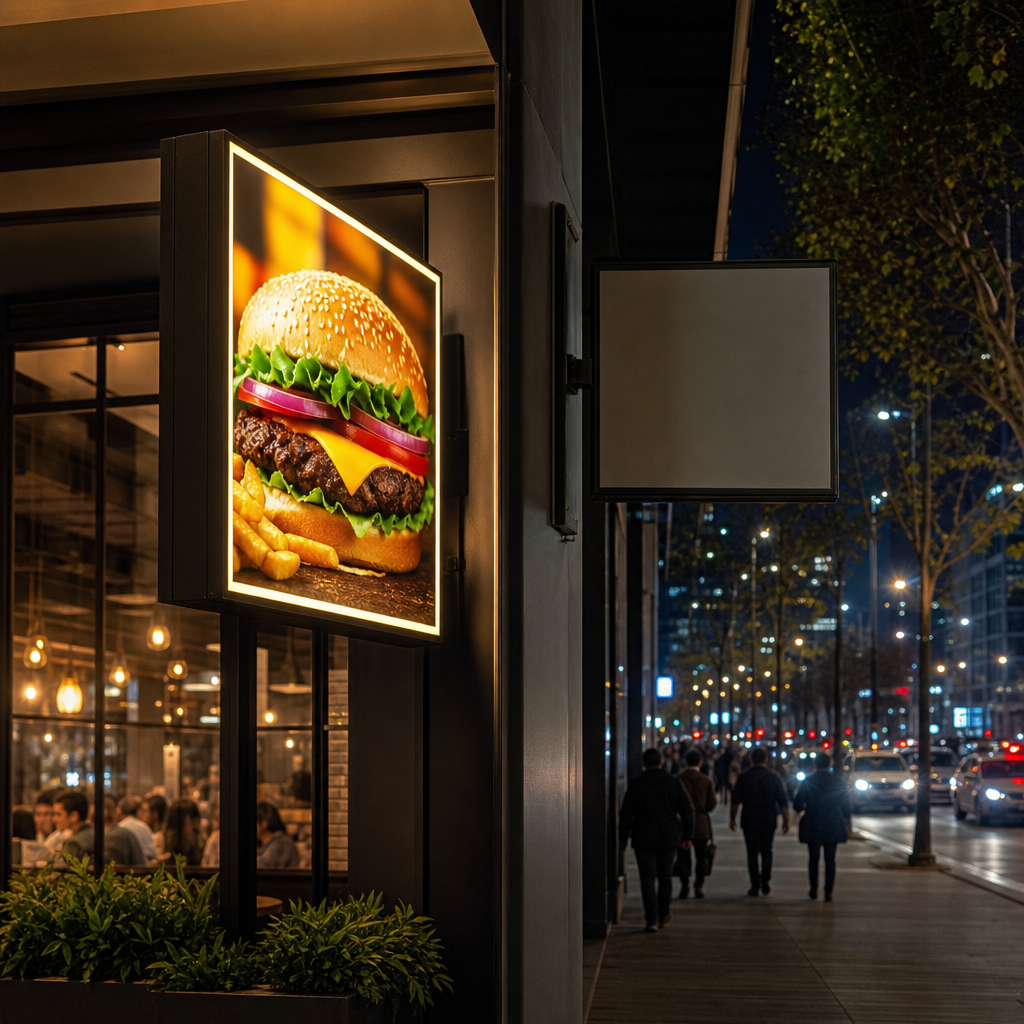
A lightbox sign is an enclosed cabinet with internal lighting, usually LED, sitting behind a translucent face that shows your logo, business name, or message. When it's lit, the face glows across its whole surface, so the sign stays readable in low light and after dark.
The usual reason businesses go this route is visibility and a steady brand presence. An internally lit cabinet keeps your message readable in more conditions than a non-illuminated sign, which matters if you're open in the evening or sitting along a busy road. From retail strips to office parks, a well-placed lightbox helps customers find you and signals that the business is open and looked after. The Signage.com team has decades of signage experience, and one thing that comes up often is that a sign is usually seen before the business itself, so its condition and clarity shape a first impression.
A few reasons they come up in buyer conversations:
- Steady visibility. Even lighting keeps the sign legible in daylight and after dark, which helps along busy roads or during evening hours.
- Brand presence. Illuminated graphics reinforce your identity and make the storefront easier to recognize.
- Durable construction. Cabinets are commonly built from aluminum with acrylic or polycarbonate faces, chosen to hold up to weather and daily use.
- Energy use. Many modern lightbox signs run on LED. The U.S. Department of Energy notes that LED lighting generally uses less energy and lasts longer than incandescent and fluorescent options, which can cut down on operating and maintenance effort over time.
- Design range. Cabinets can be made in different shapes, sizes, and colors to fit different brands and buildings.
A lightbox is worth a look when your location needs dependable, readable visibility, especially where there's real night traffic or a crowded field of nearby signs.
Common use cases
Lightbox signs turn up wherever a business wants clear, always-on visibility. They work for outside identification and for interior displays.
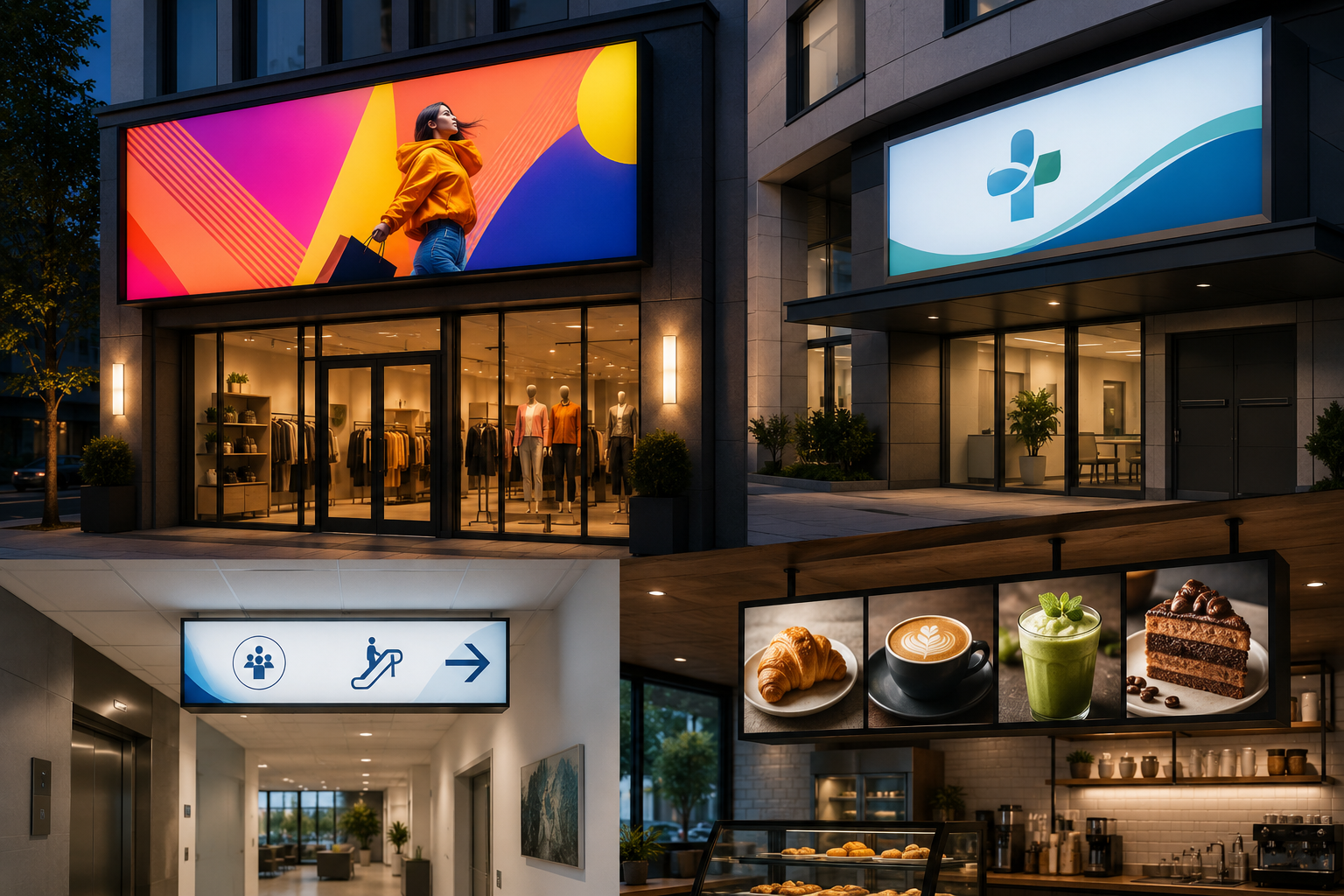
Retail stores, restaurants, and medical offices are among the most frequent users. A retail storefront sign marks the entrance and carries the brand from a distance. Restaurants use exterior cabinets to identify the building and interior lightboxes for menu boards. Medical and professional offices use illuminated signs to help visitors find a building or the right suite without guessing.
Where they tend to fit
- Retail. For a boutique, electronics store, or pharmacy, an outdoor cabinet acts as the main identifier from the street. Indoor versions can flag departments or promotions.
- Restaurants. Cafes, diners, and quick-service spots use exterior cabinets for identification and interior lightboxes to keep menu items and pricing readable.
- Medical and dental offices. Clinics and specialty practices use clean, professional cabinets so patients can find the building and the right suite.
- Corporate and multi-tenant sites. Offices use them for lobby directories, building identifiers, or as part of a monument or pylon layout for wayfinding.
- Service businesses. Salons, gyms, and auto shops on commercial strips use them to stand out and show the place is open.
- Multi-location and franchise operations. A standardized cabinet format keeps branding recognizable from one location to the next.
If your spot depends on illuminated visibility, some Signage.com outdoor sign options, including lightbox cabinets, are built with weather exposure in mind.
What to ask before you order
Asking a few questions up front helps you match the sign to your building, budget, and local rules, and it heads off surprises later. The more you can share about your location, the more useful a provider's guidance will be.
Worth raising with a sign provider:
- What's the cabinet and face made of? Ask about the aluminum cabinet and the acrylic or polycarbonate face, and how each handles sun and weather.
- What kind of lighting? LED is common for energy use and service life. Ask how the LEDs are rated and what happens if a module needs replacing.
- What mounting fits my location? Flush wall mounting, pole mounting, or building it into a monument sign each carry tradeoffs. Photos of your storefront help a provider judge the approach and flag problems.
- How does the design go on the face? Confirm whether graphics are printed on the translucent face or applied as vinyl overlays, since the two differ in look and durability.
- What about power and electrical? Clarify where the sign draws power, who handles the hookup, and whether any special wiring is involved.
- Who deals with permits and zoning? Local ordinances often govern sign size, placement, and brightness. Permit requirements and approvals are set by your local authorities, and the application usually falls to the business owner, so confirm that split before ordering.
- Can I preview the design? A visual mockup helps you picture scale, color, and placement. Signage.com's Design Studio can help you visualize a concept as an early design aid. It's a planning tool, not a stand-in for final engineering, fabrication, or code-compliance documentation.
- What's covered? Ask what applies to materials and lighting so you know the terms before production starts.
Pros and cons
Picking a storefront sign means weighing each type against your goals, location, and budget. Lightbox signs bring strong visibility with a few tradeoffs worth knowing.
On the plus side, internal lighting keeps your name and logo clear across more lighting conditions, and a lit cabinet reinforces your identity so the location reads as open and active. Cabinets can be shaped and colored to match your brand, and the aluminum-and-acrylic build is chosen to handle outdoor exposure. LED systems generally draw less power and last longer than older fluorescent setups, which can lower running and upkeep effort (U.S. Department of Energy).
The tradeoffs:
- Internal components and electrical work push the upfront cost above a non-illuminated sign.
- LEDs last a long time, but eventual module or electrical service may call for a professional.
- Some areas regulate brightness or where lit signs can go, so local rules may shape your options.
- A cabinet face is flatter. It doesn't have the depth of channel letters or dimensional lettering.
- A lower-quality translucent face can fade or yellow after years of sun, so material quality affects how it holds up.
Lightbox signs vs. channel letter signs
For storefronts, buyers often set lightbox signs next to channel letter signs. Both give you illumination and brand visibility, but the look and build are different. The pick usually comes down to budget, the look you're after, and how the sign sits on your building.
| Feature | Lightbox signs | Channel letter signs |
|---|---|---|
| Appearance | Enclosed cabinet with a uniformly lit face | Individual 3D letters, often separately lit |
| Illumination | Whole face glows as one panel | Letters can be front-lit, halo-lit, or both |
| Look | Bold, unified block; good for detailed graphics | Sculptural, dimensional, architectural |
| Customization | Any cabinet shape, single lit panel | Each letter is its own shape, adding depth |
| Graphics | Handles complex logos and imagery well | Crisp, highly legible individual letters |
| Cost factor | Often lower than complex channel-letter builds | Higher, given individual letter fabrication and wiring |
| Maintenance | Contained in one unit, generally simpler to service | Individual letter components can be more involved |
| Installation | Mounted as a unit or on a raceway | Letters mounted individually or on a raceway |
| Common fit | Retail, restaurant menu boards, detailed logos, high-traffic sites | Corporate offices, upscale retail, architectural facades |
If your brand does well with a solid, evenly lit panel that shows off detailed graphics, a lightbox is a practical option. If you want a more dimensional, architectural look, channel letters may fit better. A mockup in Signage.com's Design Studio can help you picture either one on your own storefront before you decide.
Frequently asked questions
How long do LED lightbox signs last? LED systems are commonly rated for tens of thousands of hours, which usually works out to years of service. Actual life depends on the components, how much you run them, and the conditions, so ask your provider about the rating for the specific product.
Are lightbox signs energy efficient? LED-based cabinets are generally efficient. The U.S. Department of Energy notes that LED lighting uses less energy and lasts longer than traditional lighting.
Can lightbox signs be used indoors? Yes. Smaller lightbox signs are common indoors for menu boards, directional displays, and promotional panels in retail spaces and offices.
What are lightbox signs made from? Cabinets are typically aluminum, with a translucent acrylic or polycarbonate face meant to spread light evenly and hold up to exposure.
How much do lightbox signs cost? Cost depends on size, materials, design complexity, lighting, and installation. Pricing is quoted per project, so send your specifics for an accurate estimate.
Do I need a permit for a lightbox sign? Many outdoor illuminated signs need permits, and local rules can govern size, placement, and brightness. Check your local zoning before ordering. A provider can offer general guidance, but permit approval is handled by local authorities and usually falls to the owner.
Where this leaves you
For a business with a physical location, signage shapes how easily customers find you and what they think when they first pull up. Lightbox signs give you steady lighting, durable construction, and applications that stretch across retail, restaurants, medical offices, and more.
Weighing the pros and the tradeoffs, and asking pointed questions about materials, mounting, power, and local rules, lets you order with more confidence. When you're ready to look at designs, browse Signage.com's lightbox sign collection, and use the Design Studio to visualize a concept on your storefront as an early planning step before production.
