


For a lot of customers, your outdoor sign is the first thing they take in, often before they read a review, open your website, or walk through the door. Pennsylvania businesses run the range from tight city corridors to suburban shopping centers, and in all of those settings a custom business sign does real work. It helps people find you and shapes what they think of your brand before they meet you.
This guide covers the decisions that go into ordering one: picking a sign type, comparing materials and lighting, pulling together what you need for an accurate quote, and sidestepping the mistakes that lead to rework. No single option is right for everyone, so the aim here is to help you decide, not to push you toward one product.
Key takeaways
- Sign type, materials, lighting, size, and placement are the factors that decide how a sign looks, how long it lasts, and what it costs.
- Channel letters, lightbox (LED cabinet) signs, dimensional letters, monument signs, and blade signs each fit different locations and goals.
- Material choice drives durability and appearance. An outdoor sign in Pennsylvania weather has different needs than one kept indoors.
- The quality of your quote tracks the details you hand over: logo files, location photos, an approximate size, and a preferred sign type.
- A visual mockup, like the one in Signage.com's Design Studio, lets you picture a concept on your own building before you commit.
- Local sign rules and landlord requirements change from one municipality to the next. Check them early so you are not redoing work later.
Why your sign matters for a Pennsylvania storefront
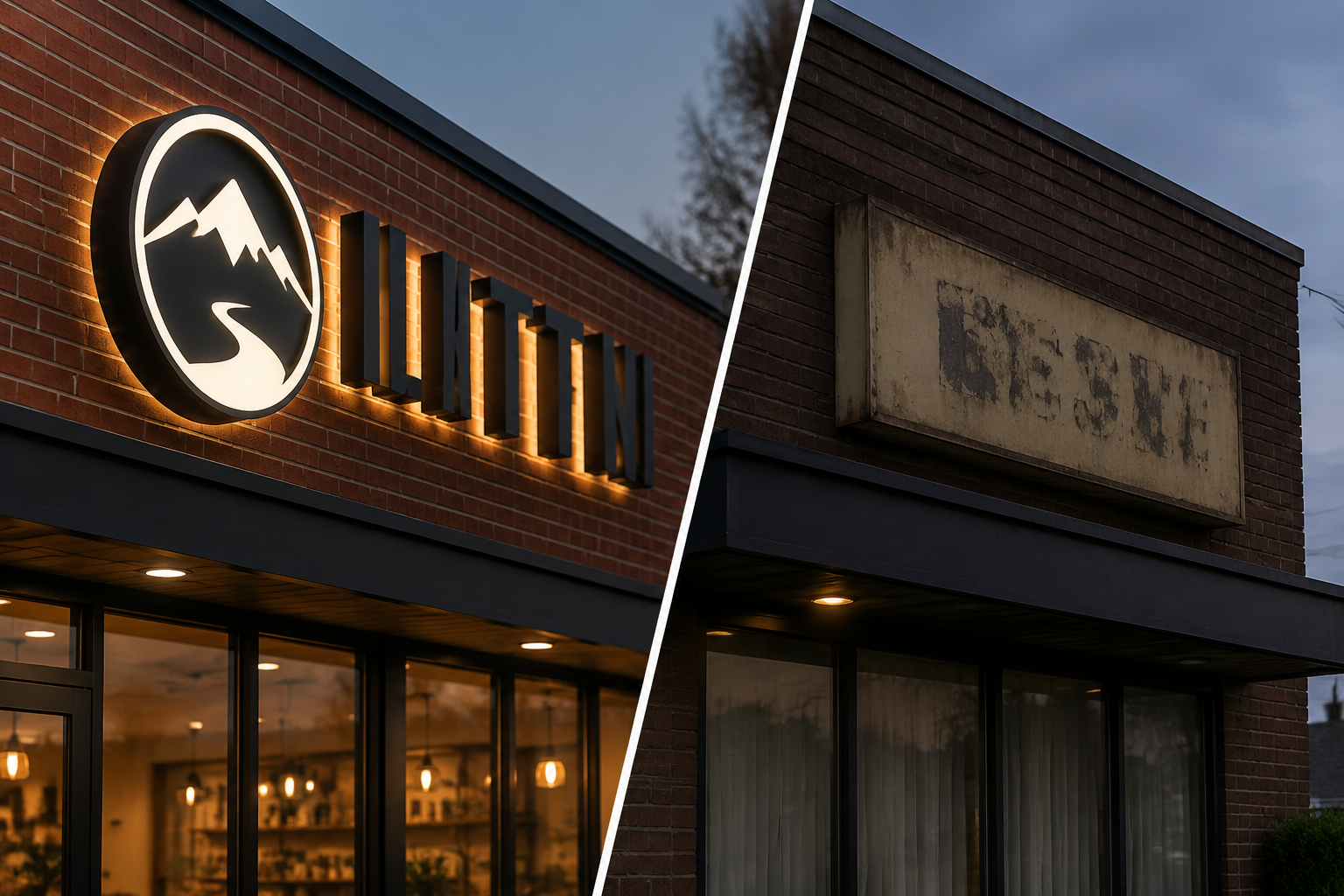
A storefront sign shows your name, but it also does a few quieter things. It signals that you take the business seriously, it helps repeat customers spot you, and it keeps working after hours, when you are closed and no one is at the counter.
The state of a sign colors how people read the business behind it. Faded, cracked, or hard-to-read signage sets the wrong tone. A clean, legible, well-lit one makes a place look settled and worth trusting. When you weigh what a sign costs, it helps to look at the whole picture:
- Visibility. If a sign is hard to read from the street, or disappears after dark, fewer people passing by actually register that you are there.
- Perception. Signage is a visual cue for everything else. A worn or cheap-looking sign can drag down how the whole storefront reads.
- Consistency. Signage that clashes with your branding muddies the message.
- Longevity. A sign built with the right materials for its spot tends to need less repair or replacement down the line.
Working through these before you order tends to save you from a redo later.
Choosing the right type of sign
The right type depends on where you are, how customers arrive (by car or on foot), what your building looks like, and the impression you want to leave. Here are the common options for Pennsylvania businesses and where each tends to land.
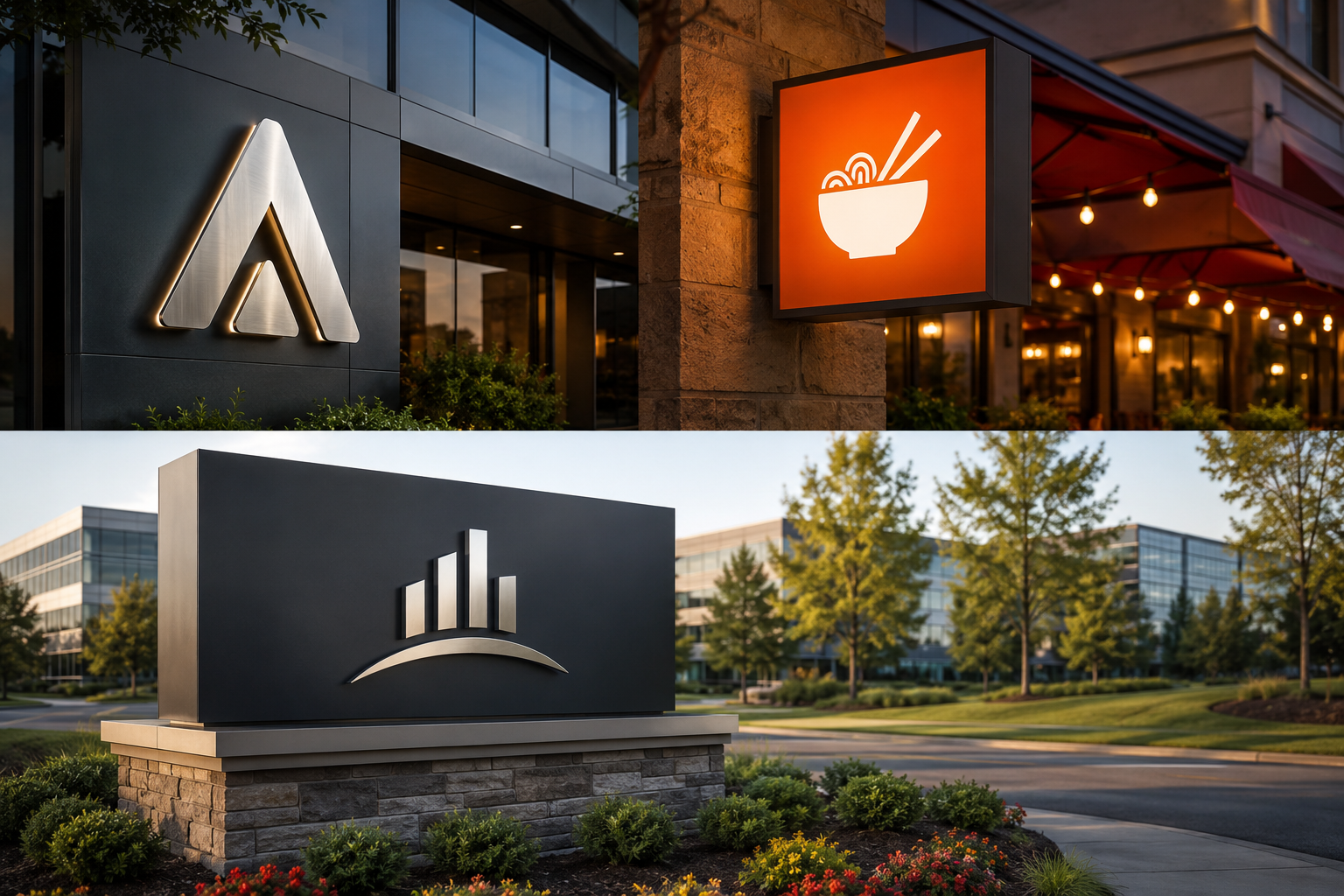
| Sign type | What it is | Common uses | Visibility notes |
|---|---|---|---|
| Channel letters | Individual 3D letters, often lit front-lit, halo-lit, or both | Retail, restaurants, corporate and multi-tenant buildings | Strong day and night; the lighting style sets the look |
| Lightbox (LED cabinet) | A lit cabinet with a translucent face showing your name or logo | Retail, restaurants, businesses wanting a clear, consistent message | Bright, even light that reads well after dark |
| Dimensional letters | Non-lit letters cut from acrylic, metal, or PVC for a raised effect | Office and lobby signs, medical offices, professional interiors | Subtle depth; pairs with external lighting at night |
| Monument signs | Low-profile freestanding signs of stone, brick, or metal | Corporate campuses, medical complexes, shopping centers | Ground-level presence for drivers at entrances |
| Blade (projecting) signs | Signs mounted perpendicular to the facade | Retail and restaurants in pedestrian-heavy districts | Catches foot traffic coming from either direction |
To make that concrete: a coffee shop on a busy street might go with front-lit channel letters so it stands out, while a law firm often leans toward halo-lit or plain metal letters for something quieter. A medical complex off a busy road might put a monument sign at the entrance, and a downtown bookstore on a walkable block could hang a blade sign to catch people on the sidewalk.
When you compare, think about where your customers are coming from, the impression you want, and how the sign reads under different light.
Materials
Material affects how long a sign lasts, how it looks, and what it costs. Outdoor signs have to take sun, moisture, and temperature swings. Indoor signs can put more weight on finish and detail.
| Material | Strengths | Typical uses |
|---|---|---|
| Acrylic | Lightweight, wide range of colors and finishes, can be formed into shapes | Lit channel letter faces, dimensional letters, indoor and outdoor signs |
| Aluminum | Lightweight, rust-resistant, durable, paintable | Channel letter bodies, flat cut letters, lightbox frames, outdoor signs |
| Stainless steel | Premium look, corrosion-resistant, low maintenance | Upscale office and corporate signage, dimensional letters |
| HDPE | Durable, weather-resistant, low maintenance | Monument sign faces, directional and outdoor panels |
| Vinyl (applied to substrates) | Flexible for graphics and lettering in many colors | Graphics on lightbox faces, window decals, branding on solid signs |
Weigh how long you want the sign to last against where it will live. Outdoor signs usually call for weather-resistant materials; indoor ones can favor finish and detail. If a sleek metal look fits your brand, take a look at the metal sign options.
How lighting affects visibility
Lighting decides whether your sign is still doing anything after sunset. What works depends on your brand, your hours, and how much light already surrounds the spot.
- Front-lit: light shines out through the face of the letters or cabinet for a bright, direct glow. Common on channel letters and for businesses that want to be noticed at night.
- Halo-lit (backlit): light comes from behind the letters and glows against the wall behind them, which reads quieter. Professional offices and upscale retail tend to pick this.
- Internal (lightbox): the whole cabinet lights from inside and pushes light evenly through a translucent face. Useful for detailed logos or a few lines of text.
- External lighting: fixtures like gooseneck lamps aim light at non-lit letters or a monument sign, so the sign and the building both get some attention.
Look at the ambient light where the sign will go. A bright corridor may need a bolder, more lit sign to compete, while a darker setting can let a subtler halo-lit option carry.
Getting ready for an accurate quote
Signage is a visual purchase, so the quote is only as good as what you share. The more specific you are, the closer the estimate lands to your actual project. Pull together what you can from this list before you ask.
- Logo and brand assets. High-resolution vector files (AI, EPS, PDF) scale cleanly. Add brand colors (Pantone or CMYK) and fonts if you have them.
- Business type. Retail, restaurant, medical, corporate, salon, or something else. It helps in recommending a fit.
- Location photos. Clear, well-lit shots of the mounting area, plus wider shots of the building and anything nearby that might get in the way.
- Sign type, if you have one in mind. Channel letters, lightbox, dimensional letters, monument, or blade. If you are not sure, describe the feel you want (say, "modern and bright" or "classic and understated").
- Approximate size and placement. Rough dimensions and where it goes, for example above the main entrance. Note how far away you want it to be readable.
- Lighting. Whether you want it lit, and which style, based on your hours and surroundings.
- Material preferences. Anything you already have in mind, or just the look you are after.
- Landlord or property rules. Ask your landlord or property manager about limits on size, materials, or design before you lock anything in.
- Timeline. A target install date. Keep in mind custom fabrication takes time.
The more you provide, the more precisely the Signage.com team can respond. You can start at the free quote page.
Seeing it first with the Design Studio
Seeing a concept before anything goes into production takes some of the guesswork out of a visual buy. Signage.com's Design Studio is a mockup aid. It helps you picture how different sign types, materials, and lighting might look on your own storefront.
A mockup can help you:
- Drop a concept onto a photo of your building to get a feel for scale and placement.
- Try different sign types, lighting options, and finishes to see what suits your brand.
- Get a rough sense of how a given size reads from different distances.
- Adjust fonts, colors, and layout to match your branding.
- Walk into the quote conversation with a concrete visual, which makes it easier for the team to understand what you are going for.
One caveat worth stating plainly: the Design Studio is for exploring ideas. It is not a stand-in for final engineering drawings, fabrication specs, permit documents, or installation planning. Those come later, tied to the specifics of your project.
Common mistakes to avoid
- Skipping local rules and landlord requirements. Sign regulations differ by municipality (city, township, or borough), and landlords often layer on their own rules. Confirming both early saves a redesign.
- Underestimating visibility. A sign that looks great up close can be hard to read from the street or at night. Factor in viewing angles, how fast traffic moves, and lighting.
- Picking materials on price alone. Materials that do not suit the setting wear out sooner, which usually means paying again to repair or replace.
- Leaving out design input. A design done without production experience can hit legibility or fabrication snags once it becomes a physical sign.
- Not asking for a mockup. Going off descriptions or flat drawings leaves more room for surprises. Seeing the concept in context first closes that gap.
- Giving too little for the quote. A vague request gets a vague estimate. Your logo, location photos, a size, and a preferred type get you a more useful answer.
- Comparing on price and nothing else. Look at a provider's process, materials, design support, and communication next to the cost.
Choosing a sign company
Who you work with has a lot to do with how the project goes. A good sign company acts more like an advisor, walking you through materials, design, and the quote. A few things worth looking for:
- Experience with commercial signage. Someone familiar with a range of sign types, materials, and installation issues can help you weigh the practical tradeoffs.
- Mockup support. Tools that let you see a sign on your own building cut down the guesswork on a visual buy.
- A clear quoting process. A good provider tells you what they need and is upfront about what drives cost and options.
- Solid materials and fabrication. This matters most for outdoor signs and higher-value products like channel letters and monument signs.
- Responsive communication. Straight answers throughout keep a project moving. For customers in Pennsylvania, Signage.com offers customer pickup by appointment at its Philadelphia location.
- A focus on business signage. Providers that specialize in custom business and storefront signs, rather than treating signs as a sideline, tend to bring more relevant know-how. Signage.com focuses on custom business signs, storefront signs, and national sign programs.
Where to go from here
Picking a custom business sign in Pennsylvania comes down to a handful of practical calls: a type that fits your location, materials suited to the setting, lighting that keeps you visible, and a quote request detailed enough to reflect the real project. A tool like the Design Studio can help you picture a concept before you commit.
When you are ready, you can request a quote or look through the custom business sign options to narrow down what fits your storefront.
FAQ
How much do custom business signs cost in Pennsylvania? It depends on sign type, materials, size, lighting, and complexity. A real number takes the specifics of your project.
What do I need for an accurate quote? Have your logo files, photos of the install location, approximate dimensions, a preferred sign type, any material preferences, lighting needs, and any landlord or local requirements.
Can I see what my sign will look like before I order? Many providers offer mockups. Signage.com's Design Studio helps you picture a concept on your building. Final engineering, fabrication, and installation details are handled later in the process.
Which sign types work well at night? Lit options like front-lit channel letters, halo-lit channel letters, and LED cabinet (lightbox) signs are common picks for businesses that want to be seen after dark.
Do I need a permit for a business sign in Pennsylvania? Requirements vary by local municipality (city, township, or borough). Check your local sign ordinances and confirm any landlord approvals before fabrication.
What is the difference between front-lit and halo-lit channel letters? Front-lit letters light up through the face for a bright, direct glow. Halo-lit (backlit) letters push light from behind, so it glows softly against the wall for a quieter look.
