


Quick answer: A blade sign is a projecting sign that extends perpendicularly from your storefront or building facade instead of sitting flat against it. It earns its place when your business needs to be seen from side angles, by pedestrians and slow-moving traffic coming from either direction, working alongside your main fascia sign. They tend to help most in walkable retail districts, multi-tenant buildings, and food-and-drink spots where evening visibility matters.
Key takeaways
- A blade sign projects out from the building, so it adds visibility from side angles that a flat-mounted sign can miss.
- It suits businesses in busy foot-traffic areas, urban centers, and multi-tenant buildings where direct street-facing visibility is limited.
- Illumination can carry a blade sign into the evening, which often matters for restaurants, bars, and later-hour retail.
- Material, size, and lighting should line up with your brand, your landlord's guidelines, and local sign rules.
- A blade sign works best as one piece of a coordinated storefront plan rather than on its own.
What a blade sign is, and why it helps
A blade sign mounts to a building facade and extends outward, perpendicular to the wall. The value is angle. Because it sticks out into the street's line of sight, it can catch someone approaching from the left or right, before they are standing directly in front of your door.
Most businesses put their main effort into a primary sign above the entrance: channel letters, dimensional letters, or a lightbox. Those signs matter, but they usually read best head-on. A blade sign adds a second visual touchpoint that works more like a flag. It signals your location further down the block and helps people find your exact door in a busy row of storefronts.
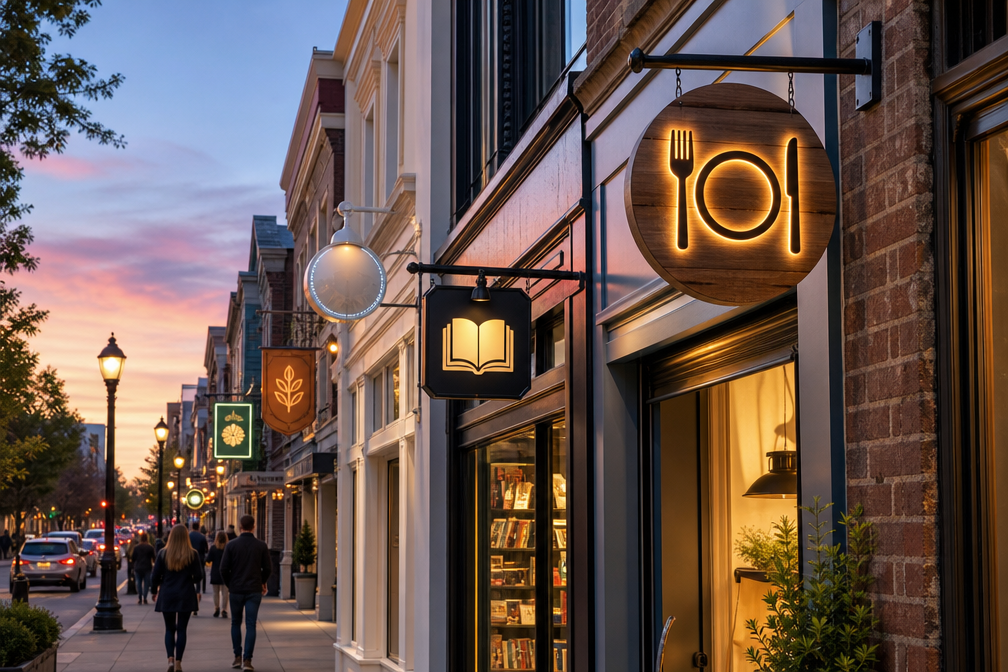
A well-placed blade sign can do a few things at once. It reaches people approaching from either direction, mostly pedestrians. It gives your logo or name a second prominent spot. It helps customers pinpoint your unit in a crowded strip or a larger building. And it can add a classic or modern accent to the facade without eating up much frontage.
When a blade sign makes sense
Blade signs tend to pay off where side visibility is the constraint. If your goal is getting noticed by foot traffic or found from a distance, the situations below are worth weighing.
Walkable urban districts
In dense downtowns and commercial strips, storefronts sit close together and pedestrians scan constantly. A projecting sign can break out of that visual clutter, while a flat sign may only register once someone is right in front of the shop.
Multi-tenant buildings and shopping centers
When your business is one of many in a shared building or strip, a blade sign helps mark your specific unit. That is handy for a salon, a service business, or a retail boutique tucked among neighbors.
Limited frontal signage space
Some facades restrict the size or placement of a flat-mounted sign. Projecting outward uses a different plane and can pull attention without a wide horizontal surface.
Restaurants, cafes, and bars
For food-and-drink businesses, evening visibility often matters. An illuminated blade sign can announce your presence to people farther down the street and works alongside your main restaurant signage.
Setback entrances or narrow storefronts
If your entrance is recessed or your frontage is narrow, a blade sign can push your identity out toward the main line of sight, so you are less likely to be walked or driven past.
Reinforcing an existing sign
Even with strong channel letters or a lightbox, a blade sign adds another layer. Together they build a more consistent physical brand presence.
Designing and planning a blade sign
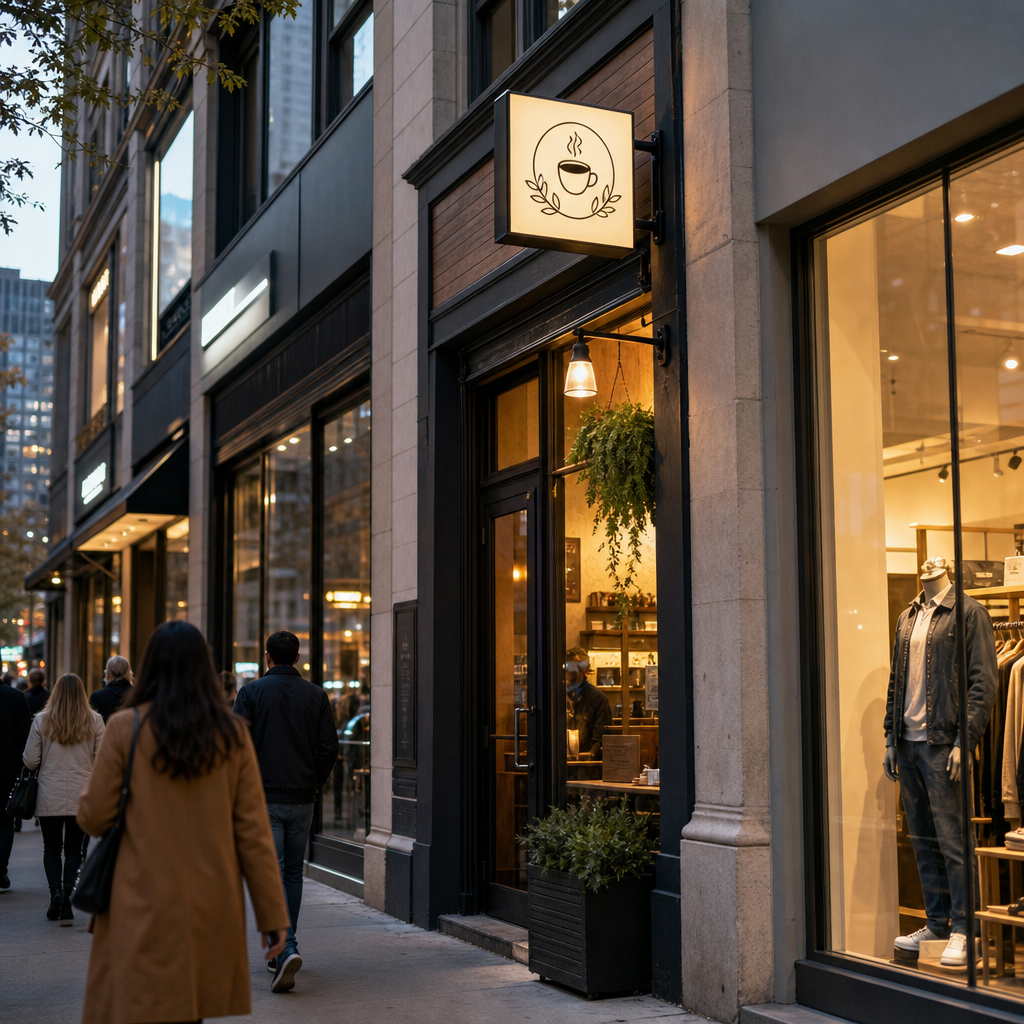
Adding a blade sign is more than picking a shape. A few practical calls shape how well it performs and how smoothly it moves toward production.
Material options
| Material | Look and feel | Notes |
|---|---|---|
| Metal (aluminum, steel, copper) | Classic to high-end; painted, polished, or brushed | Durable; finish affects maintenance |
| Acrylic | Modern; supports internal illumination | Cuts into complex shapes; wide color range |
| Wood | Rustic, natural, artisanal | Needs proper treatment for outdoor exposure |
| HDU (high-density urethane) | Carveable, wood-like | Weather-resistant carved detail |
Illumination approaches
| Type | How it works | Typical effect |
|---|---|---|
| Internal | LEDs behind a translucent face | Even, bright glow; strong evening visibility |
| External | Gooseneck lamps or spotlights | Highlights texture; a traditional look |
| Halo / backlit | Opaque face with light behind it | A subtle glow around letters or logo |
A non-illuminated blade sign can also fit where evening visibility matters less, or where local rules or landlord guidelines limit lighting.
Size and placement
Keep the sign large enough to read at a distance, but in proportion to the storefront. Mounting height is often set by local rules to keep clearance for pedestrians and vehicles, and how far the sign projects from the wall is commonly regulated too. It also helps to check how the sign reads from pedestrian eye level and from passing cars, since those two views can differ.
Permitting and landlord rules
Signage is a physical, regulated asset, so it is worth checking these before production rather than after.
- Local rules: municipalities commonly set requirements for size, projection, height, illumination, and materials. Confirm what applies to your address with your local authority.
- Landlord and property management: commercial leases often include signage guidelines that can be stricter than city rules. Review your lease or ask property management early.
- Historic districts: some areas add aesthetic requirements to protect the character of the block.
Requirements vary by location and building, so treat the list above as things to confirm, not a guarantee of what will be approved.
Coordinating with your other signage
A blade sign reads best when it shares fonts, colors, materials, and lighting cues with your primary storefront sign. Keeping that consistency across your custom business signs supports a unified, professional look.
Getting ready to request a quote
Having a few details on hand tends to make a blade-sign quote more accurate and cut down on back-and-forth:
- Brand assets: high-resolution vector files (AI, EPS, PDF) are ideal for your logo and lettering.
- Storefront photos: show the intended mounting area and its surroundings.
- Approximate dimensions: even a rough target size helps.
- Material and lighting preferences: note whether you are leaning toward metal, acrylic, illuminated, and so on.
- Mounting surface: describe the wall material, such as brick, stucco, or siding.
- Known constraints: mention any landlord guidelines or local considerations you already know about.
Using visual mockups
Because a blade sign is a visual, high-consideration purchase, seeing a concept in context helps. Signage.com's Design Studio offers an AI-assisted visual mockup workflow so you can preview how a sign concept might look on a storefront. It is useful for comparing letter styles, colors, illumination types, and scale, and for picturing placement next to your existing signage before you commit to a direction.
A mockup is a way to explore look and layout. It is not final engineering, permit, fabrication, installation, or code-compliance documentation. Those details get confirmed separately as your project moves forward.
How a quality blade sign supports your storefront
Your signage is part of a customer's first impression. A well-made, well-maintained blade sign can read as professional and established. Faded, broken, or poorly lit signage can undercut that before anyone walks in. Done well, a blade sign shows attention to detail, keeps your presentation clear and current, makes your entrance easier to find, and gives your brand a physical, tangible form.
FAQ
What is the main purpose of a blade sign?
To add perpendicular, side-angle visibility to a storefront, catching the eye of pedestrians and drivers approaching from either direction, alongside a head-on fascia sign.
Are blade signs usually illuminated?
Many are, whether internally with LEDs, externally with lamps, or halo-lit for a glow effect. Lighting can extend visibility into the evening, which matters for a lot of businesses. Non-illuminated options exist too.
Do I need a permit for a blade sign?
Outdoor signs often require permits, and landlords or property managers may have their own approval process. Requirements vary by municipality and building, so check with your local authority and property manager before fabrication.
What materials work well outdoors?
Aluminum, steel, acrylic, and HDU are common choices for weather resistance. The right fit depends on the look you want, your budget, and your local climate.
How do blade signs compare with channel letter signs?
Channel letters usually mount flat against the facade and spell out a name head-on. Blade signs project perpendicularly for side visibility. The two are often used together as part of one storefront plan.
Can a blade sign use my logo?
Yes. Blade signs are customizable to your logo, fonts, colors, and shape, so the sign reflects your brand.
Is a blade sign right for you?
A blade sign gives a storefront a second line of visibility, reaching people from angles a flat-mounted sign can miss. That tends to help in walkable districts, multi-tenant buildings, and evening-focused businesses. When you are weighing one, keep the practical details front and center: material durability, the right illumination for your hours, a scale that suits the frontage, and the local and landlord rules you will need to confirm. Gathering your brand assets and storefront photos ahead of time makes for a smoother quote, and a visual mockup in Design Studio can help you picture the result before you settle on a direction. You can browse the blade signs collection to start narrowing down what fits your storefront.
